

By: ExploreNepal Trails In TMSTUDDIO
Nepal is the ultimate destination for adventure enthusiasts, offering world-class trekking, mountaineering, and cultural experiences. From the towering peaks of the Himalayas to serene villages, every trek promises a unique adventure. With Explore Nepal Trails, trekkers and climbers get expert guidance, safe itineraries, and authentic Himalayan experiences.
Top Treks in Nepal – By Explore Nepal Trails

Classic and Popular Treks
Nepal’s trekking trails range from iconic classics to lesser‑known gems deep in the high Himalayas:
Everest Region Treks
- Everest Base Camp Trek – A legendary trek to the foot of the world’s highest mountain.
- Everest Panorama Trek – A shorter Everest region trek with stunning mountain views.
- Everest Three High Passes Trek – A challenging route combining major high passes and breathtaking views.
- Gokyo Ri Combine Chola Pass via EBC Trek – Glacier lakes and high pass views.
- Lower Everest Pikey Peak Trek – A scenic option with panoramic views.
Annapurna Region Treks
- Annapurna Base Camp Trek – One of Nepal’s most beloved treks.
- Annapurna Circuit Trek – Classic long‑distance trek around Annapurna.
- Mardi Himal Trek – A quieter route with close ridgeline views.
- Nar‑Phu Valley Trek with Kang La Pass – Remote cultures and alpine panoramas.
- Lamjung Himal Base Camp Trek – Off‑the‑beaten‑path Annapurna region trek.
- Tilicho Lake Trek – High alpine lake adventure.
Manaslu & Eastern Region Treks
- Manaslu Circuit Trek – Remote classic around the 8th highest peak.
- Tsum Valley Trek – Cultural immersion in a hidden Himalayan valley.
Upper Dolpo & Far Western Treks
- Lower Dolpo Trek – Vast rugged landscapes and ancient culture.
- Upper Dolpo Trek – Remote and mystical Himalayan trek.
- Saipal, Churen Himal & Api Saipal Base Camp Treks – Wild and lesser-travelled routes deep in Nepal’s far west.
Kanchenjunga Region
- Kanchenjunga North & South Base Camp Trek – Trek to the base of the third‑highest peak on Earth.
- Kanchenjunga Base Camp with Lumba Sumba Pass Trek -Extended adventure in remote eastern Nepal.
Long & Epic Trails
- Great Himalayan Trail Trek – One of the world’s longest continuous trekking routes across the Himalayas.
Climbing and Expedition Peaks
For high-altitude climbers seeking challenges, Nepal offers some of the best peaks in the world:
- Mera Peak Climbing – The highest trekking peak in Nepal, ideal for first-time climbers seeking adventure.
- Island Peak Climbing – A technical yet rewarding Himalayan climb.
- Ama Dablam Expedition – For experienced climbers seeking iconic Himalayan summits.
- Mount Everest Expedition – The ultimate mountaineering adventure.
- Manaslu Expedition – Remote and challenging with spectacular scenery.
Speciality Trekking Experiences by Explore Nepal Trails
Nepal is not just about classic trekking trails; it also offers unique and immersive experiences for adventurers seeking something different. Cultural homestays allow trekkers to live with Sherpa or Tibetan families, gaining firsthand insight into local traditions, daily routines, and hospitality. Visiting remote monasteries along Upper Mustang and the Everest region provides opportunities to participate in spiritual rituals and witness ancient ceremonies.
High-altitude lakes such as Tilicho, Gosainkunda, and Gokyo are not only visually stunning but also perfect for trekking, photography and reflection. Wildlife enthusiasts will find Nepal rewarding with sightings of rare species like red pandas, snow leopards, and Himalayan birds. These specialty experiences enhance every trek with cultural, natural, and photographic highlights, making each journey uniquely memorable.
- Cultural Homestays: Stay with Sherpa or Tibetan families.
- Monastery Visits: Participate in local rituals along Upper Mustang and the Everest region.
- High-Altitude Lakes: Tilicho Lake, Gosainkunda Lake, Gokyo Lakes.
- Wildlife Experiences: Observe red pandas, snow leopards, and rhododendron forests.
- Photography Treks: Perfect for adventure photographers capturing Himalayan vistas.
Food, Accommodation, and Local Life provided by Explore Nepal Trails
Trekking through Nepal provides a glimpse into the country’s rich culinary and cultural heritage. Along most trails, trekkers can stay in traditional teahouses and guesthouses, offering simple yet comfortable accommodations. Local cuisine is hearty and nourishing, with staples such as dal bhat (lentil soup with rice), momo (dumplings), and thukpa (noodle soup) keeping energy levels high during demanding treks.
Trekkers should pay attention to hygiene, ensure safe drinking water using purification methods, and maintain a balanced diet to sustain stamina. Engaging with local communities provides additional insights into Nepalese life, from festivals and rituals to agricultural practices, making the journey both adventurous and culturally enriching.
- Typical teahouses and guesthouses along trails.
- Local cuisine highlights: Dal Bhat, momo, thukpa.
- Tips for hygiene, water purification, and high-altitude nutrition.
Top 5 Adventure Challenges by Explore Nepal
Nepal offers some of the most thrilling and demanding trekking and climbing experiences in the world. High-altitude climbs, such as those on Mount Everest and Kanchenjunga, test physical endurance and mental resilience. Glacier crossings and rope-assisted sections require careful navigation and proper equipment.
Multi-day treks in remote regions, such as Dolpo and Manaslu, present logistical challenges and isolation, rewarding trekkers with unparalleled scenic beauty.
Extreme weather conditions, especially during monsoon and winter, can dramatically affect trekking conditions, requiring careful planning. Lastly, endurance challenges along the Great Himalayan Trail demand both stamina and determination, offering a once-in-a-lifetime adventure across Nepal’s diverse Himalayan landscapes.
Essential Preparation and Equipment by Explor Nepal
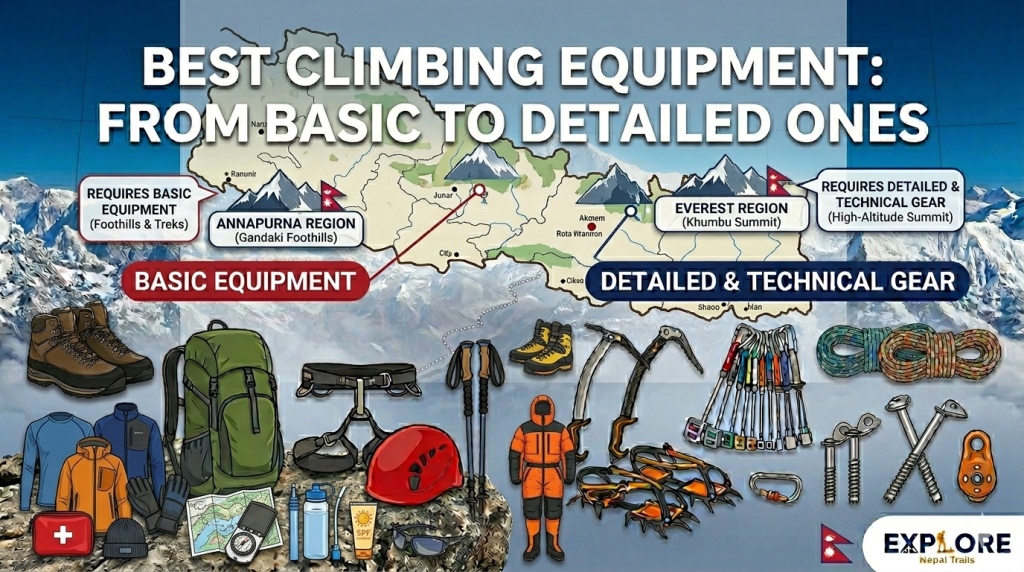
Proper preparation and equipment are crucial for a safe and enjoyable trek or climb:
Physical & Mental Preparation
- Endurance training, cardiovascular fitness, and strength training for high-altitude trekking.
- Mental preparation for long days and challenging conditions.
- Acclimatization planning to reduce the risk of altitude sickness.
Clothing & Gear
- Layered clothing for variable temperatures
- Waterproof jackets and pants
- Insulated gloves and hats
- Sunglasses and sunscreen for UV protection
- Trekking boots and gaiters
Climbing Equipment
For high-altitude peaks and technical climbs, essential gear includes:
- Crampons and ice axes
- Harnesses and carabiners
- Ropes for glacier and rope-assisted sections
- Mountaineering helmets
- Sleeping bags rated for extreme cold
You can explore a full list of recommended gear in the Climbing & Trekking Equipment guide on Explore Nepal Trails.
Professional Support
- Experienced guides and porters ensure safety and smooth progress throughout the journey.
- Local expertise adds cultural insight and logistical support for a seamless experience.
Cultural and Scenic Highlights
Trekking in Nepal is not just about mountains it’s also cultural and scenic immersion:
- Sherpa villages and Buddhist monasteries on Everest and Mera Peak treks.
- Tibetan-influenced settlements in Upper Mustang.
- Panoramic Himalayan views from Pikey Peak, Annapurna Base Camp, and Langtang.
- Unique flora and fauna across different regions.
Learn more via Mountains tours and travels.
Adventure Tours Beyond Trekking
Nepal also offers non-trekking adventures:
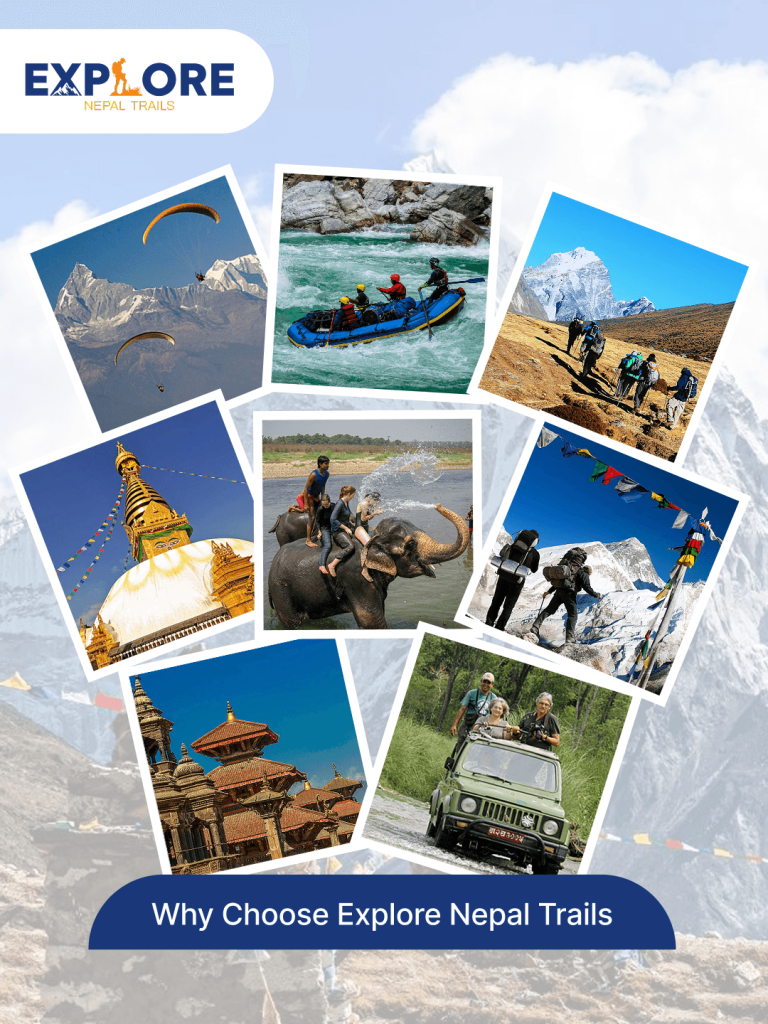
- Jungle safaris in Chitwan and Bardia
- Cultural tours in Kathmandu, Bhaktapur, and Pokhara
- River rafting, paragliding, and mountain biking
- Helicopter tours for panoramic mountain views
All options are available through Explore Nepal Trails Tours.
Tips for Trekkers and Climbers
- Best seasons: Pre-monsoon (March–May) and post-monsoon (September–November)
- Acclimatize properly to avoid altitude sickness
- Book through trusted operators like us
- Learn safety, packing tips, and trek etiquette at Nepal Trekking Tips
Conclusion
Nepal is a paradise for adventurers. Whether trekking to Everest Base Camp, climbing Mera Peak, or exploring remote regions like Upper Mustang, preparation, guidance, and cultural awareness make all the difference. With proper equipment, experienced support, and expert planning, every trek and climb becomes a safe and unforgettable adventure. Start planning your Himalayan journey with Explore Nepal Trails today
Frequently Asked Questions (FAQ)
1. What is the best season to trek in Nepal?
Pre-monsoon (March–May) and post-monsoon (September–November) offer clear skies, moderate temperatures, and safe trekking conditions.
2. Do I need prior trekking or climbing experience to trek in Nepal?
Popular treks like Everest Base Camp or Annapurna Base Camp suit beginners, while high-altitude climbs like Mera Peak or Everest require prior experience.
3. What kind of equipment do I need for trekking and climbing?
Trekking requires layered clothing, boots, and sleeping bags; climbing also needs ice axes, crampons, harnesses, ropes, and helmets.
4. How physically challenging are the treks and expeditions in Nepal?
Moderate treks need good fitness, while high-altitude expeditions like Kanchenjunga Base Camp or Dolpo demand endurance and acclimatization.
5. Is it safe to trek in Nepal?
Nepal is safe if you follow altitude, weather, and safety guidelines, especially with professional guides like Explore Nepal Trails.
6. Can I experience local culture during the treks?
Yes, trekkers can visit Sherpa villages, monasteries, and Tibetan-influenced settlements, and participate in local customs and festivals.
7. What are the most challenging trekking routes in Nepal?
Challenging routes include Everest Three High Passes, Kanchenjunga Base Camp, Upper Dolpo, Manaslu Circuit, and the Great Himalayan Trail.
8. How can I minimize environmental impact while trekking?
Follow Leave No Trace principles: carry out litter, respect wildlife and culture, and support eco-friendly trekking practices.