

The digital marketing landscape has never been more competitive. With millions of businesses competing for attention across search engines, social media platforms, and email inboxes, having access to the right digital marketing resources is no longer optional; it is a fundamental requirement for survival and growth.
In 2026, consumer behavior is increasingly shaped by personalized online experiences. Businesses that leverage the right mix of tools, platforms, and expert guidance consistently outperform those operating without a structured approach. From solo entrepreneurs to mid-sized agencies, the ability to identify, access, and use quality digital marketing resources determines who scales and who stagnates.
This guide breaks down everything you need to know, from essential tools and platforms to the role of digital marketing experts, consulting services, and strategic planning, so your business can compete smarter and grow faster.
What Are Digital Marketing Resources?
Digital marketing resources are any tools, platforms, guides, software, or services that help a business plan, execute, manage, and optimize its online marketing efforts. They span a wide spectrum from free keyword research tools and analytics dashboards to premium advertising platforms and professional consulting engagements.
The main types of digital marketing resources include:
- Tools and Software: SEO platforms, social media schedulers, email marketing tools, CRM systems
- Educational Guides and Courses: Blogs, certifications, video tutorials, and industry reports
- Analytics and Tracking Platforms: Tools that measure website traffic, user behavior, and campaign performance
- Advertising Platforms: Google Ads, Meta Ads Manager, LinkedIn Campaign Manager
- Professional Services: Digital marketing consulting, agency retainers, and freelance strategists
Together, these resources create a complete ecosystem that enables businesses to attract, engage, convert, and retain customers online. The key is knowing which resources to use at which stage of your growth.
Why Every Business Needs Digital Marketing Resources?
Whether you are a startup testing product-market fit or an established brand looking to expand market share, digital marketing resources deliver measurable advantages across every stage of your marketing funnel.
Better Decision-Making
Data-driven tools remove guesswork from marketing decisions. Instead of relying on intuition, businesses can analyze keyword demand, audience demographics, competitor strategies, and campaign performance before committing a budget.
Improved Marketing Efficiency
The right platforms automate repetitive tasks, scheduling social posts, sending email sequences, tracking rankings, and freeing your team to focus on strategy and creative work rather than manual execution.
Higher ROI
Businesses that use structured digital marketing resources consistently report higher return on investment. When you target the right keywords, reach the right audience, and track results accurately, every dollar works harder.
Supports the Broader Benefits of Digital Marketing
Digital marketing resources are the foundation that makes the benefits of digital marketing, such as global reach, cost efficiency, measurable results, and precise targeting, actually achievable in practice. Without the right resources, even the best strategies fall short.
Essential Digital Marketing Resources for Businesses
Below are the five core categories of digital marketing resources every business should have in its stack, with recommended tools in each.
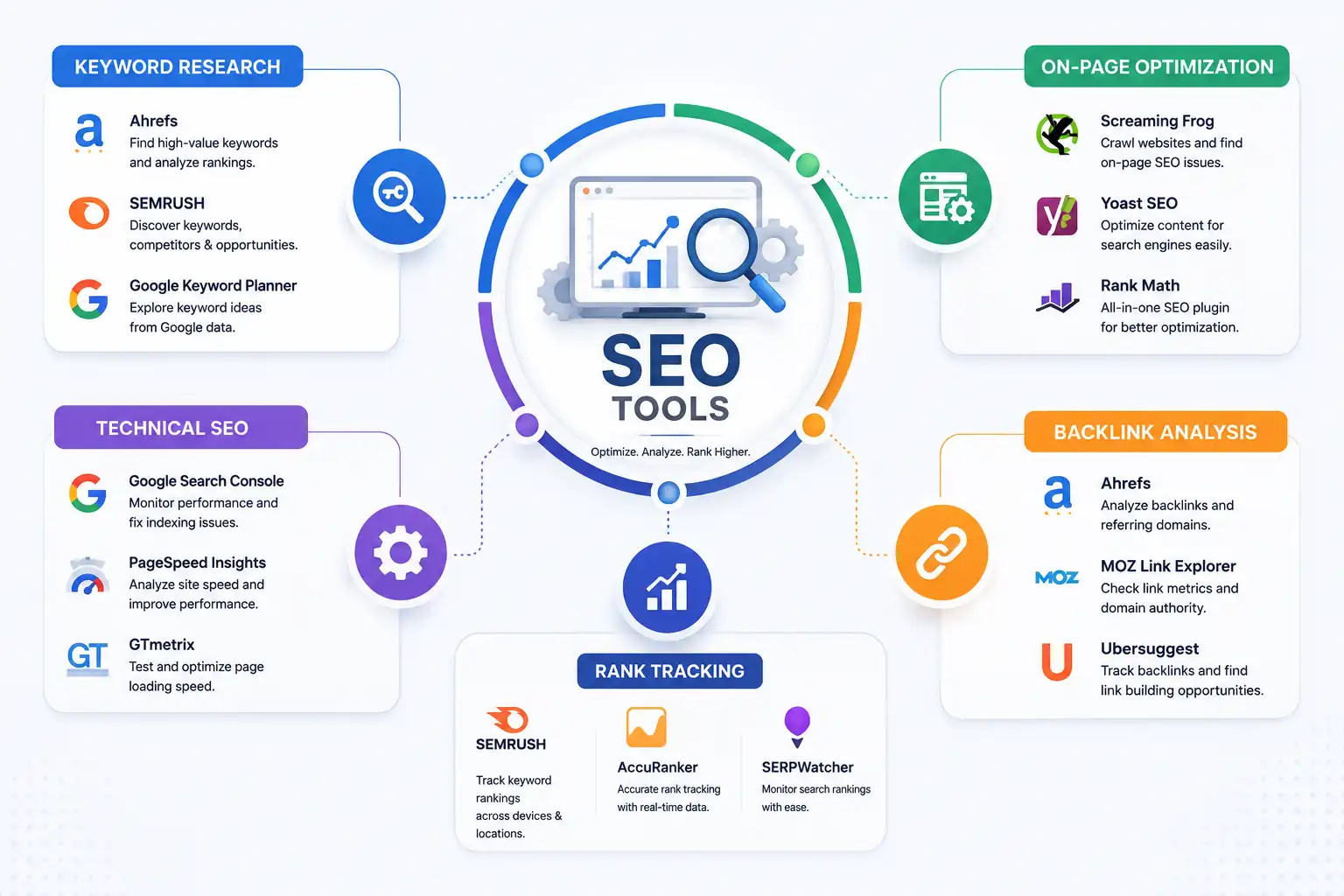
1. SEO Tools
Search engine optimization remains the highest long-term ROI channel for most businesses. The right SEO tools help you identify what your audience is searching for and position your content to rank for those queries.
- Ahrefs: Comprehensive backlink analysis, keyword research, and content gap identification
- Semrush: All-in-one SEO suite covering keyword tracking, site auditing, and competitor research
- Google Search Console: Free tool from Google showing how your site performs in search results
- Moz Pro: Domain authority tracking, keyword explorer, and page optimization insights
- Ubersuggest: Budget-friendly keyword research and SEO audit tool, ideal for small businesses
These tools are core digital marketing resources for any business prioritizing organic search visibility.
2. Social Media Management Tools
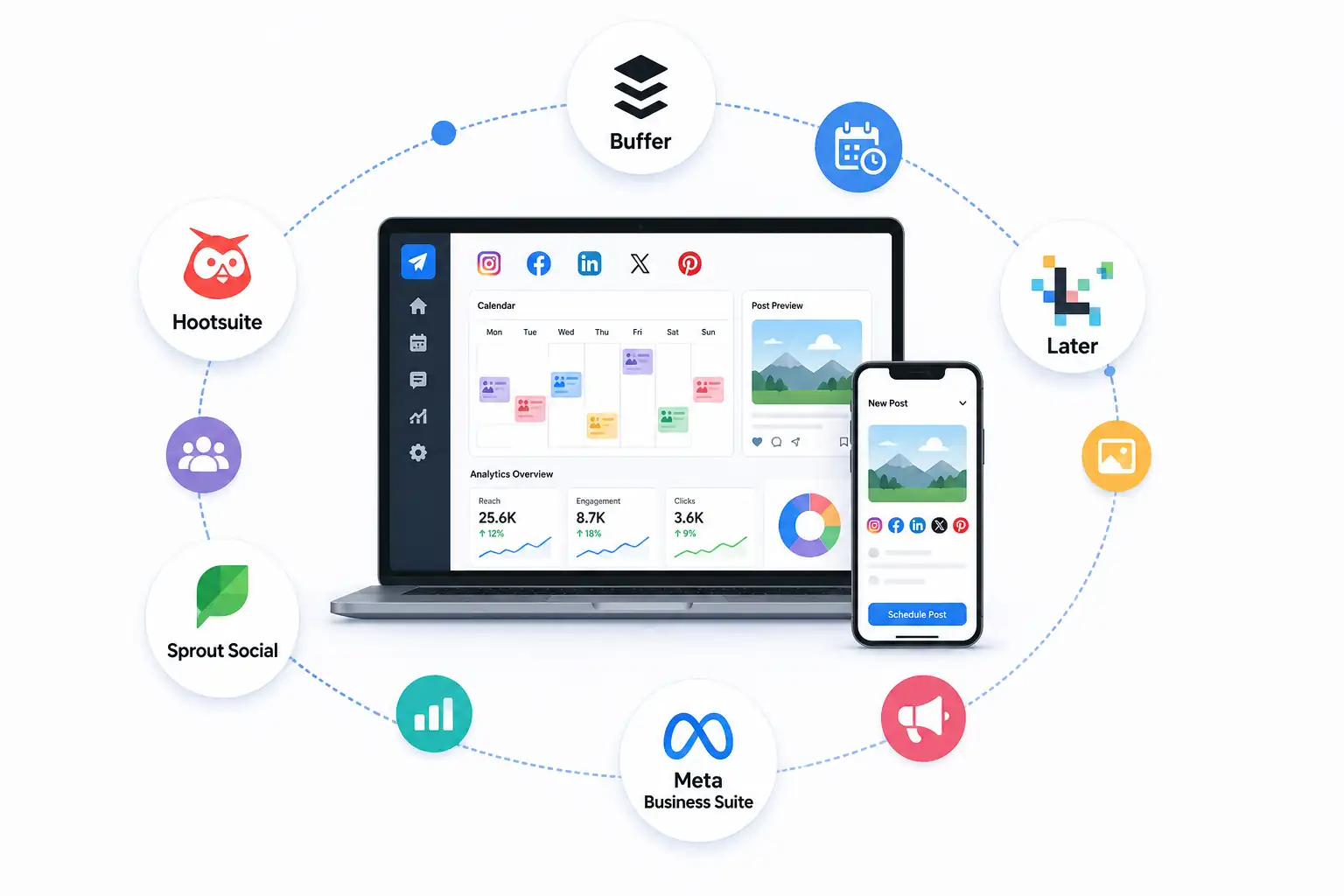
Managing multiple social media channels manually is inefficient and error-prone. Social media management platforms centralize scheduling, publishing, engagement, and analytics in one place.
- Buffer: Clean, straightforward scheduling for Instagram, Facebook, LinkedIn, Twitter/X, and Pinterest
- Hootsuite: Enterprise-grade social media management with team collaboration features
- Later: Visual content calendar ideal for Instagram and TikTok-focused brands
- Sprout Social: Combines scheduling with in-depth audience analytics and reporting
- Meta Business Suite: Free native tool for managing Facebook and Instagram pages and ads
3. Analytics Tools
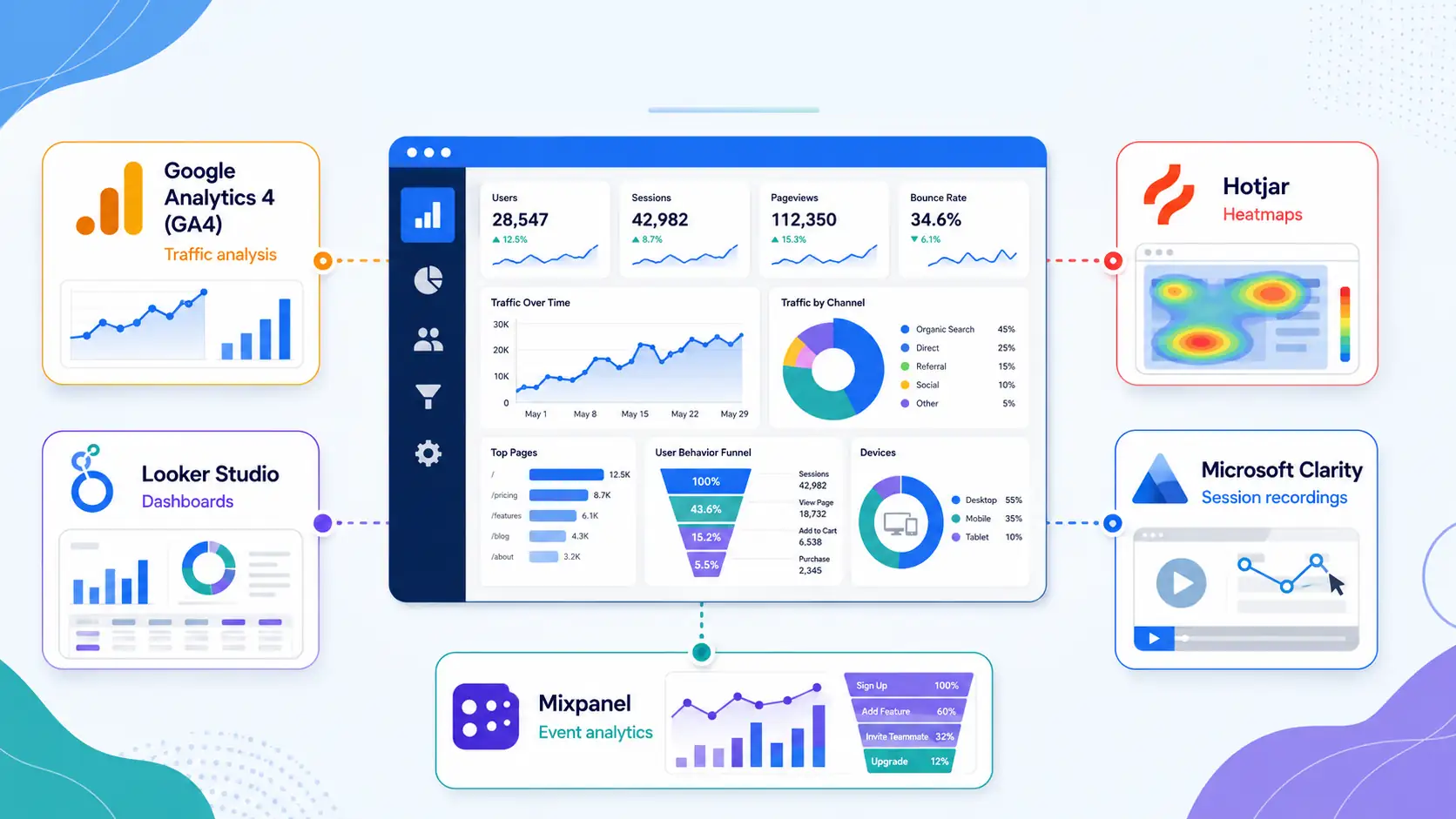
Without analytics, you are marketing blind. Analytics platforms reveal where your traffic comes from, how visitors behave on your website, which campaigns are converting, and where users drop off.
- Google Analytics 4 (GA4): The industry standard for website traffic and user behavior analysis
- Looker Studio: Free Google tool for building custom, shareable marketing dashboards
- Hotjar: Heatmaps and session recordings to understand on-page user behavior
- Microsoft Clarity: Free heatmap and session recording tool, excellent GA4 complement
- Mixpanel: Advanced event-based analytics for product and SaaS companies
4. Content Marketing Resources
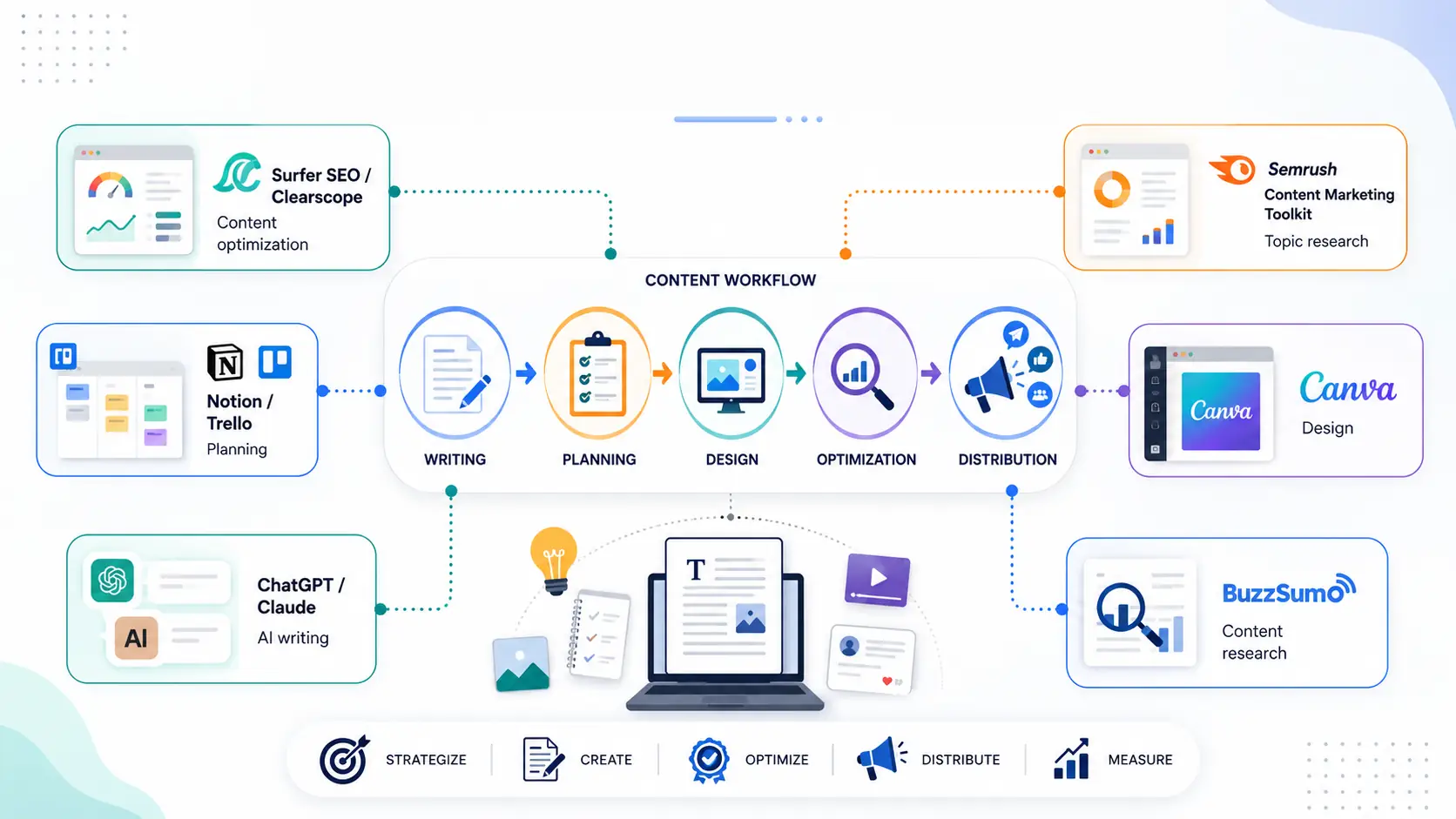
Content is the fuel that powers every digital marketing channel. The right content marketing resources help you research, create, optimize, and distribute content efficiently.
- Surfer SEO / Clearscope: AI-powered content optimization tools that align your writing with ranking factors
- Semrush Content Marketing Toolkit: Editorial calendar, topic research, and content audit features
- Notion / Trello: Editorial planning and team collaboration for content pipelines
- Canva: Graphic design for social media, blog images, and presentation assets
- ChatGPT / Claude: AI writing assistants for ideation, drafts, and content scaling
- BuzzSumo: Content research and influencer discovery platform
5. Advertising Tools
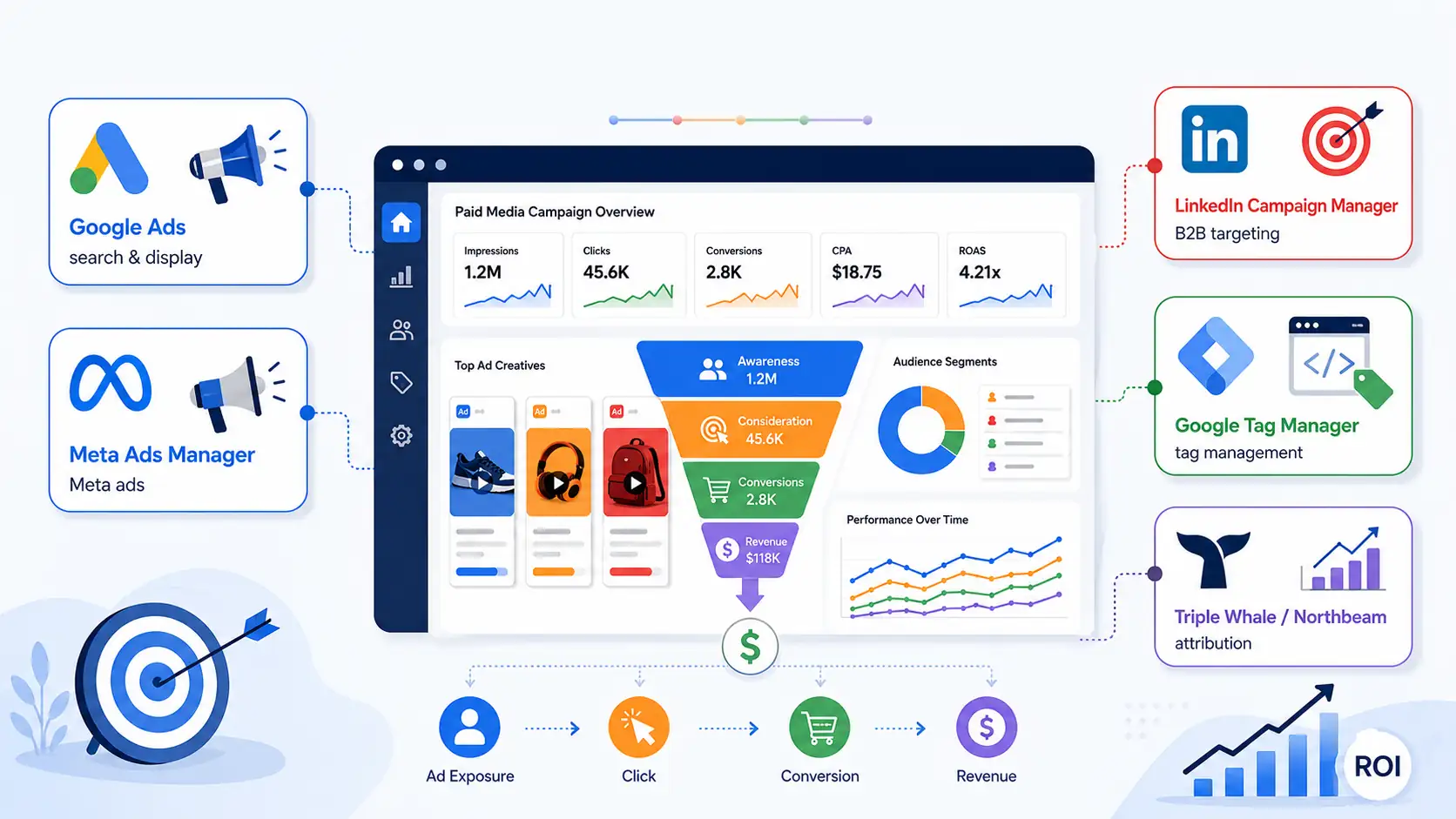
Paid advertising accelerates growth when combined with organic strategies. The right advertising tools help you launch, manage, and optimize campaigns across Google, Meta, and other paid channels.
- Google Ads: Search, display, shopping, and YouTube advertising
- Meta Ads Manager: Facebook and Instagram advertising with advanced audience targeting
- LinkedIn Campaign Manager: B2B advertising with job title, industry, and company size targeting
- Google Tag Manager: Manage tracking tags and pixels without developer dependency
- Triple Whale / Northbeam: Multi-touch attribution for e-commerce advertisers
Digital Marketing Resources for Startups
Startups operate under tight budget constraints, making it even more critical to choose the right digital marketing resources. The good news is that many of the most powerful tools offer free tiers or affordable entry-level plans designed specifically for early-stage businesses.
Recommended low-cost digital marketing resources for startups:
- Google Search Console + GA4: Free, essential, and incredibly powerful for SEO and analytics
- HubSpot CRM (Free): Contact management, email tracking, and deal pipeline at no cost
- Mailchimp Free Plan: Up to 500 contacts and basic email automation
- Canva Free: Professional-quality design without a designer
- Buffer Free Plan: Basic social scheduling for up to three channels
- Ubersuggest Free: Keyword research without a premium subscription
Beyond tools, many startups benefit from working with a digital marketing agency for startups, a partner that understands resource constraints, moves quickly, and focuses on channels most likely to generate early traction. A specialist startup agency can set up analytics, run initial paid experiments, and build organic foundations without the overhead of a large enterprise agency.
Role of Digital Marketing Experts in Using These Resources
Having access to digital marketing resources is one thing. Knowing how to use them effectively is another. This is where digital marketing experts and a skilled digital marketing strategist become invaluable.
Strategy Planning
A digital marketing strategist aligns your tool stack and campaigns with broader business objectives. Rather than using every available resource, they identify the highest-impact channels for your specific audience, industry, and growth stage.
Tool Selection and Configuration
Digital marketing experts evaluate your current stack, identify gaps, and configure tools correctly, ensuring your analytics track the right events, your SEO tools are set up for your target market, and your advertising accounts are structured for efficiency.
Performance Optimization
Resources generate data. Experts turn that data into insight and action. A digital marketing strategist reviews performance reports, identifies what is working, cuts what is not, and continuously refines their approach to improve results over time.
Working with experienced digital marketing experts transforms your resource investment from an expense into a compounding asset. Every insight gained from your tools becomes part of a strategic feedback loop that drives sustainable growth.
Free vs Paid Digital Marketing Resources
One of the most common questions businesses face is when to rely on free tools and when to invest in paid platforms. The answer depends on your stage of growth, budget, and the complexity of your marketing needs.
Category | Free Tools | Paid Tools |
SEO | Google Search Console, Ubersuggest (free tier) | Ahrefs, Semrush, Moz Pro |
Social Media | Meta Business Suite, Buffer (3 channels) | Hootsuite, Sprout Social, Later Pro |
Analytics | GA4, Looker Studio, Clarity | Hotjar Pro, Mixpanel, Triple Whale |
Content | Canva Free, Google Docs, Notion (free) | Surfer SEO, Clearscope, BuzzSumo |
Mailchimp (500 contacts), HubSpot Free | Klaviyo, ActiveCampaign, ConvertKit | |
Advertising | Google Ads (pay per use) | LinkedIn Campaign Manager, Northbeam |
Use free tools when you are just starting out, testing a new channel, or operating with a minimal budget. Upgrade to paid tools when you need deeper data, automation, team collaboration, or when the cost of the tool is clearly outweighed by the time saved or revenue generated.
How Digital Marketing Consulting Helps Businesses?
Even with access to the best digital marketing resources, many businesses struggle to translate data into results. Digital marketing consulting bridges that gap by bringing an expert perspective and a structured methodology to your marketing operations.
Expert Guidance Without Full-Time Overhead
A digital marketing consulting engagement gives you access to senior-level expertise on a flexible basis. Rather than hiring a full-time Chief Marketing Officer, businesses can work with a consultant to get strategic guidance, campaign recommendations, and performance reviews at a fraction of the cost.
Better Resource Utilization
Consultants audit your existing tool stack and identify where you are overspending, underutilizing, or missing key capabilities. The result is a leaner, more effective resource setup aligned with your actual business goals.
Improved Campaign Performance
With a consultant overseeing your campaigns, you benefit from ongoing optimization, A/B testing, audience refinement, budget reallocation, and creative improvements driven by data rather than guesswork. Businesses that invest in digital marketing consulting typically see measurable improvements in cost per acquisition, conversion rate, and overall campaign ROI within the first quarter.
Are Digital Marketing Resources Enough Without a Strategy?
The short answer: no.
Digital marketing resources are powerful instruments, but an instrument without a skilled player produces noise, not music. Many businesses invest in tools, subscribe to platforms, and generate data without any clear plan for how to act on what they learn. The result is wasted spend, inconsistent output, and frustration.
This is exactly why the role of a digital marketing strategist is so critical. A strategist does not just use resources; they build the framework that determines which resources to use, how to measure success, which audiences to target, and how to allocate budget across channels for maximum impact.
Without strategic direction:
- SEO tools generate keyword data, but no content strategy follows
- Analytics dashboards show traffic drops, but no one knows how to fix them
- Ad platforms spend budget quickly, but targeting remains unrefined
- Social media channels are active, but content does not align with business goals
The businesses that get the most from their digital marketing resources are those that combine the right tools with a clear strategy, ideally guided by an experienced digital marketing strategist who can connect every resource to a measurable business outcome.
Conclusion
Digital marketing resources are not a luxury reserved for large enterprises. In 2026, they are the baseline for any business serious about competing online. From free SEO tools and social media platforms to advanced analytics software and professional digital marketing consulting, the ecosystem of resources available today is richer and more accessible than ever before.
The key takeaways from this guide:
- Digital marketing resources span tools, platforms, education, and professional services
- Every business stage, from startup to enterprise, has resources suited to its budget and needs
- SEO, analytics, social media, content, and advertising are the five pillars every resource stack should cover
- Free tools are powerful starting points; paid tools deliver depth, automation, and scale
- Digital marketing experts and a skilled digital marketing strategist transform resources into results
- Digital marketing consulting adds senior-level perspective without full-time hiring costs
- Resources without a strategy generate data, not growth
The businesses that will lead their markets in 2026 and beyond are those that invest wisely in digital marketing resources and pair them with a clear strategy, consistent execution, and expert guidance. Start building your resource stack today and commit to using every tool with intention and purpose. Need Any Guidance, Contact us Today!
Frequently Asked Questions
1. What are digital marketing resources?
Digital marketing resources are tools, platforms, educational guides, software, and professional services that help businesses plan, execute, and optimize their online marketing activities. They include SEO tools, social media platforms, analytics software, content creation tools, and advertising platforms.
2. Which digital marketing resources are best for beginners?
Beginners should start with free, beginner-friendly platforms: Google Search Console and GA4 for analytics, HubSpot Academy for learning, Canva for design, Buffer for social media scheduling, and Ubersuggest for keyword research. These tools provide strong foundations without requiring a large budget.
3. How do digital marketing resources help improve ROI?
Digital marketing resources improve ROI by enabling data-driven decisions, automating repetitive tasks, identifying high-converting keywords and audiences, and tracking campaign performance in real time. Businesses that use structured resources consistently outperform those relying on guesswork.
4. What is the difference between a digital marketing expert and a digital marketing strategist?
A digital marketing expert is a broad term for someone with in-depth knowledge across one or more digital marketing disciplines. A digital marketing strategist specifically focuses on building high-level marketing roadmaps, channel selection, budget allocation, and aligning marketing activities with business goals.
5. When should a startup invest in paid digital marketing resources?
Startups should invest in paid tools when free alternatives no longer provide sufficient data depth, when team size requires collaboration features, or when the efficiency gains from a paid tool clearly exceed its cost. Many startups begin with free tools and upgrade after reaching initial revenue milestones.
6. What does digital marketing consulting typically include?
A standard digital marketing consulting engagement includes a full audit of your website, SEO, and analytics setup; competitor benchmarking; a strategic roadmap with prioritized recommendations; channel-specific guidance; and regular performance reviews. Some consultants also offer hands-on campaign management.
7. How do I choose between free and paid digital marketing resources?
Use free tools when you are in early testing phases or have a limited budget. Transition to paid tools when you need more advanced features, greater data volume, team collaboration, or automation. Always evaluate whether the cost of a paid tool is offset by time saved or revenue generated.
8. Can digital marketing resources replace the need for a strategy?
No. Resources are instruments, strategy is the plan that determines how to use them effectively. Without a clear digital marketing strategy, even the best tools produce fragmented results. A digital marketing strategist ensures every resource is aligned with measurable business objectives.
9. What digital marketing resources are most important for SEO?
The most important SEO resources include Google Search Console (free, essential), Ahrefs or Semrush (comprehensive research and auditing), Surfer SEO or Clearscope (content optimization), and the Moz Blog or Google Search Central for ongoing education on algorithm updates and best practices.
10. How much do digital marketing consulting services cost?
Digital marketing consulting costs vary widely based on scope and experience level. Hourly consulting rates typically range from $75 to $300+ per hour. Monthly retainers for ongoing consulting range from $1,000 to $10,000+ depending on the number of channels covered, deliverables, and the consultant’s market positioning