

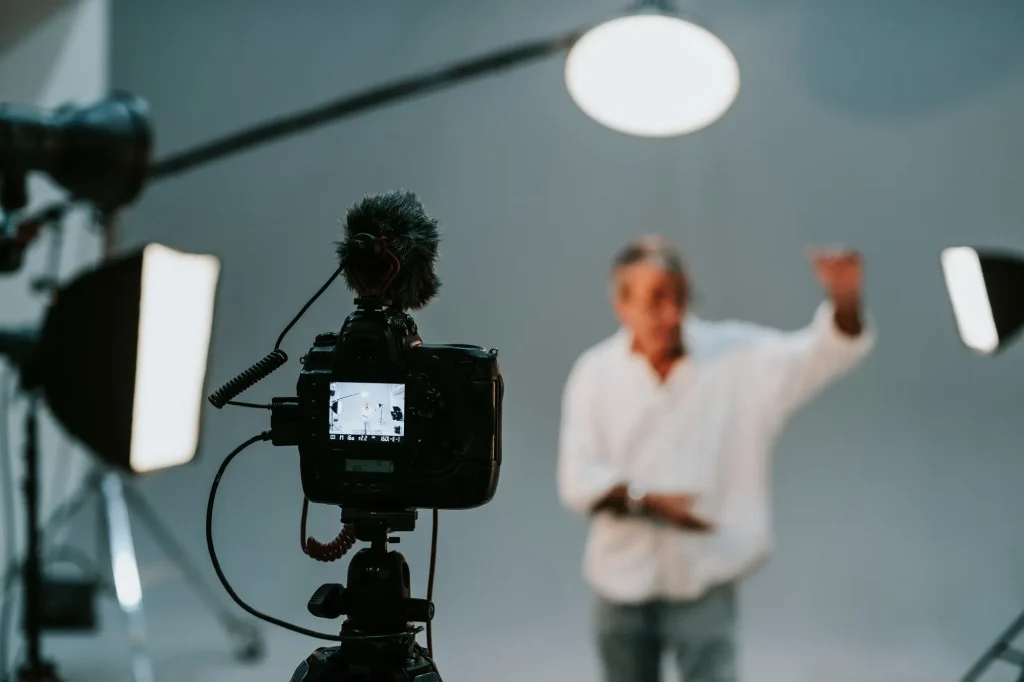
Choosing between a video production company and a freelance videographer usually gets framed as a budget decision: one costs more, one costs less. But that framing misses the real question: what does your project actually need to succeed, and which option can deliver that reliably?
This guide breaks down the real differences between the two, so you can match your choice to the project instead of just the price tag.
What Is a Freelance Videographer?
A freelance videographer is typically one person handling filming and often editing too. They work independently, usually with their own camera and basic lighting/audio gear, and take on projects directly without a larger team behind them.
This setup works well for smaller, single-deliverable projects where flexibility and lower cost matter more than scale.
What Is a Video Production Company?
A video production company is a full team: a director guiding the creative vision, camera operators handling filming, dedicated editors, and often separate specialists for sound and lighting. Instead of one person doing everything, work moves through a structured process: pre-production (planning and scripting), production (filming), and post-production (editing, color grading, sound design).
This structure is built for scale, consistency across multiple deliverables, and accountability if something needs to be redone.
Services a Video Production Company Typically Offers
A full production company usually covers the entire video-making process from start to finish. Typical services include:
Video shooting: Professional filming using proper cameras, lenses, and multi-angle setups, rather than a single handheld camera
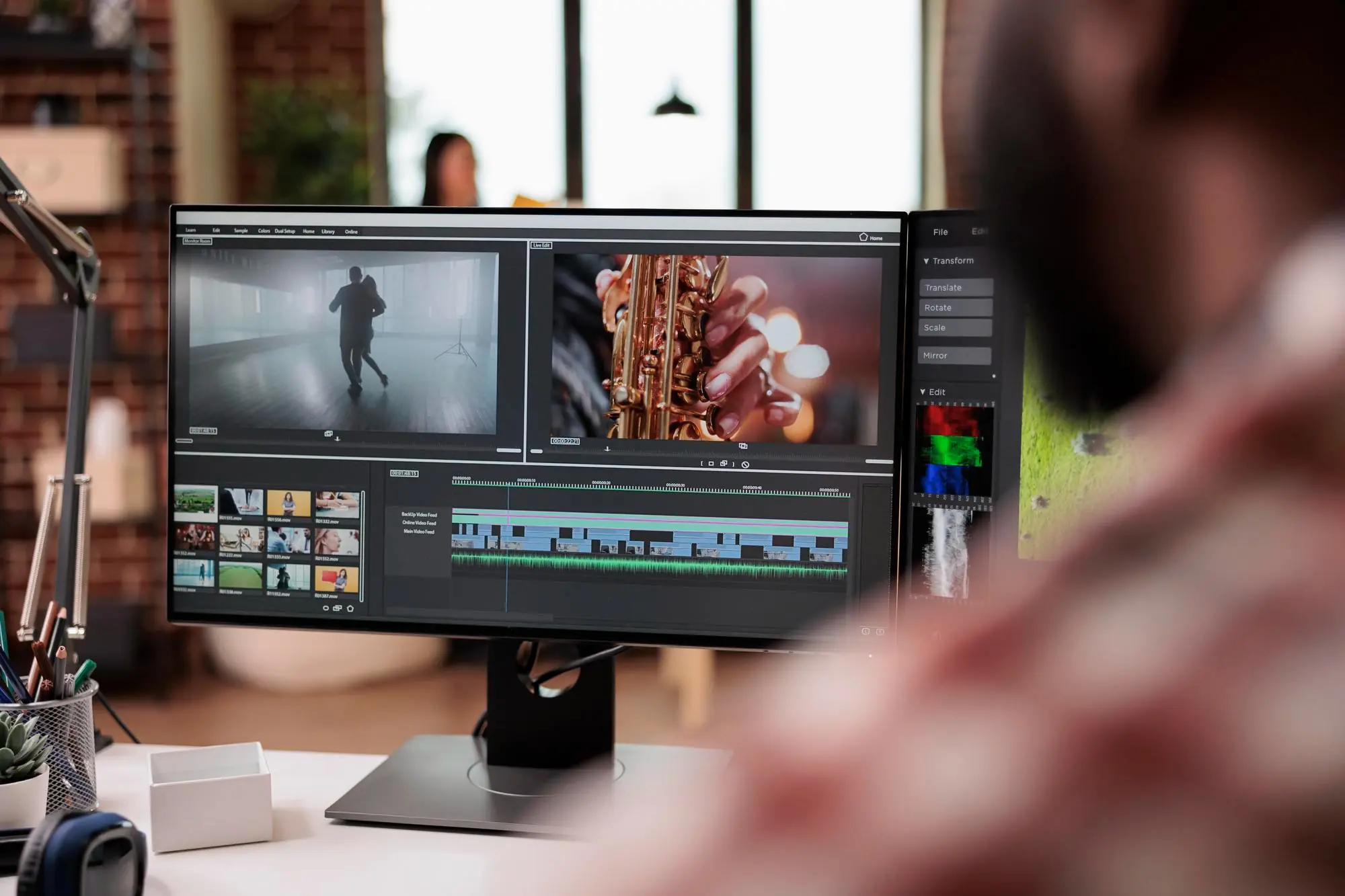
Video editing: Assembling raw footage into a polished, structured final product
Concept development and scripting: Turning an idea or goal into a structured story before filming begins
Lighting setup: Dedicated lighting equipment and crew for consistent, professional-quality visuals
Audio recording: Proper microphones and sound equipment, not just the camera’s built-in mic
Drone/aerial videography: Aerial shots for events, real estate, establishing shots, or large-scale productions
Color grading: Adjusting tone, contrast, and color consistency to match brand identity across all footage
Multiple format deliverables: One shoot producing several versions: long-form video, short social cuts, vertical formats for Reels/Stories, and trimmed ad versions
Revisions and feedback rounds: Structured review cycles built into the timeline, rather than open-ended back-and-forth
Key Differences at a Glance
Factor | Freelance Videographer | Video Production Company |
Cost | Lower | Higher, but scales with project complexity |
Crew size | 1 person (sometimes 2) | Full team (director, camera, editor, etc.) |
Equipment | Basic to moderate | Professional-grade, multi-camera capable |
Turnaround | Faster for small jobs | Structured timeline, better for larger scope |
Reliability | Dependent on one person’s availability | Backup crew and processes in place |
Scalability | Limited | Built for multi-location, multi-day projects |
When a Freelance Videographer Makes Sense?
- Small budget projects where cost is the primary constraint
- Simple, single-location shoots with minimal setup
- Quick social content that needs a fast turnaround over polish
- Ongoing informal content, like behind-the-scenes clips or casual social videos
When a Video Production Company Makes Sense?
- Multi-location or multi-day shoots requiring coordination
- Projects that need scripting or storyboarding before filming begins
- Brand campaigns requiring multiple deliverables, a main ad cut, social versions, and a long-form piece
- Higher-stakes projects like product launches or corporate videos, where reliability and consistency directly affect how the brand is perceived
Risks of Choosing the Wrong Option
Hiring a freelancer for a brand-critical campaign carries real risk: if they become unavailable mid-project, there’s often no backup, and quality can vary between projects since there’s no larger process holding it consistent.
On the other hand, hiring a full production company for a very small, simple project can be unnecessary; you may be paying for a team and process that a single project doesn’t need.
How to Decide What’s Right for Your Business?
Ask yourself:
- How complex is the shoot: one location and one day, or multiple locations and days?
- How many deliverables do you actually need from this one project?
- How much flexibility do you have on the timeline?
- How brand-critical is this content? Is it a casual social post, or does it represent your company at a launch or campaign level?
If your answers point toward complexity, multiple deliverables, or high stakes, a production company is the safer investment. If it’s a simple, low-stakes project, a freelancer may be all you need.
Conclusion
Neither option is inherently “better”; they’re built for different kinds of projects. A freelance videographer offers flexibility and lower cost for simple work. A video production company offers structure, consistency, and scale for anything more complex or brand-critical.
The right choice comes down to matching the option to what your project actually needs.
Frequently Asked Questions
1. What’s the main difference between a video production company and a freelance videographer?
A production company is a full team working through a structured process, while a freelancer is typically one person handling filming and sometimes editing independently.
2. Is a freelance videographer cheaper than a production company?
Generally, yes, freelancers usually have lower overhead and charge less, but this often reflects a smaller scope of equipment, crew, and post-production support.
3. Can a freelance videographer handle a full brand campaign?
It’s possible for very small campaigns, but most brand campaigns with multiple deliverables and higher production value are better suited to a full production company.
4. What happens if a freelance videographer becomes unavailable mid-project?
Since there’s typically no backup crew, this can delay or disrupt the project. Production companies usually have contingency staffing built into their process.
5. Do video production companies only work on large-budget projects?
No, many production companies scale their services to fit different budgets, though their structure is generally built for more complex or higher-stakes work.
6. Which option is better for social media content?
It depends on the content. Quick, casual social clips often suit a freelancer, while polished, campaign-level social content benefits from a production company’s process.