
A clear content plan shapes the cost and timeline of digital content production in Nepal. Scope depends on content pillars, formats, scripts, production needs, and approvals, so one rate or turnaround will not suit every brief. Short-form and long-form content can also require different levels of planning and execution.
Creative work should feel true to your brand and support practical business goals. Consistent content starts with a focused plan: what you want to communicate, who you need to reach, and where each piece will appear.
This guide explains how content pillars turn business priorities into useful ideas, how planning maps those ideas into a production schedule, and what affects project costs and timelines. It also covers how short-form and long-form scripts shape filming and editing, helping you define the scope before production begins.
Key Takeaways
- Build content pillars around audience needs and business priorities to turn scattered ideas into a coherent production plan.
- Scope, format, scripting, production requirements and approvals all influence project costs and delivery schedules.
- Assess a studio’s fit by how its creative process supports your content goals, channels and required formats.
- Choose equipment and software according to the content being produced, from capture through editing and final delivery.
How professionals develop content pillars, ideas, and plans for digital content production
A sound content plan connects business goals with audience needs before settling on formats or a publishing calendar. In Nepal, platform choices and production capacity shape that plan.
Professional Content Theme and Idea Development
Start by identifying your audience, business priorities, and the questions customers ask. Turn those themes into content pillars, such as product education, customer stories, or industry insights. Then develop specific ideas for each pillar and assign a purpose, format, and channel. For example, a customer story could become a short video, a graphic, and a longer YouTube script. A calendar sets out production and approval steps. Check that the themes are clear, the publishing cadence for consistent social media content creation is realistic, and the visuals suit the content.
Audience Platforms and Content Formats
At the start of 2025, Nepal had 14.3 million social media users. Facebook had over 16.6 million accounts in December 2024, while Instagram had 4.25 million users. YouTube’s user base was projected to reach 16 million by 2026. These figures point to substantial platform reach, but they don’t rank formats. Teams can test short videos, carousels, graphics, and longer storytelling against Instagram reach and audience response and campaign goals.
Agencies can coordinate strategy, production, and approvals across different roles, while freelancers often collaborate directly around their individual skills. The right fit depends on whether your brief needs coordinated formats or a specialist for a focused task, such as videography.
For campaigns in Nepal, use original or properly licensed music, images, and footage, and get permission before featuring identifiable people. Keep advertising claims clear and supportable. These practical safeguards help guide production; specific legal requirements depend on the material and its use.
Production risks include platform dependence, changing audience habits, and approval delays. TikTok was temporarily banned in Nepal between 2023 and 2024, showing why a plan should avoid relying on one channel. To hire a creator, define the audience, deliverables, and schedule, then assess relevant portfolio examples, storytelling, and communication. A trial brief can reveal how well their skills match the project.
Estimated project costs and durations
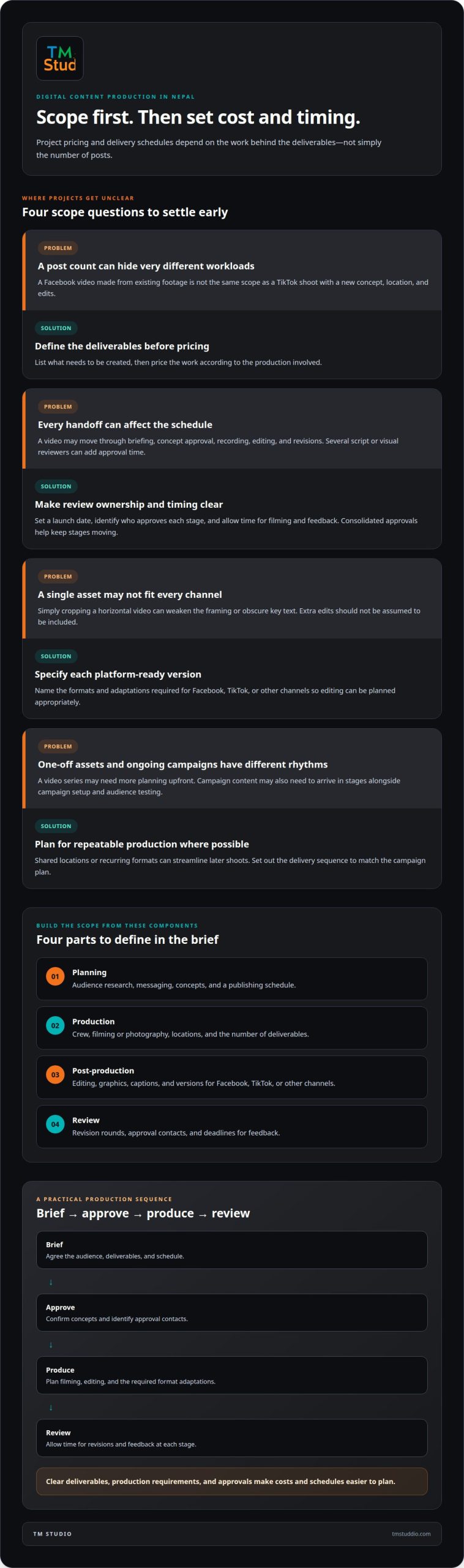
For a Nepal campaign, cost depends on the agreed scope, not just the number of posts. Content creation may involve planning, scripting, filming, editing, graphics, captions, and format adaptations. A Facebook video made from existing footage requires different work from a TikTok shoot with a new concept, location, and edits. Define the deliverables first, then price the work according to the production involved.
Production time follows the same logic. A video may pass through briefing, concept approval, recording, editing, and revisions. Each handoff affects the schedule, especially when several people review scripts or visuals. A video series may need more planning upfront, while shared locations or recurring formats can streamline later shoots. Clear feedback and consolidated approvals help keep each stage moving.
TM Studio recommends separating the work into practical components:
- Planning: audience research, messaging, concepts, and a publishing schedule.
- Production: crew, filming or photography, locations, and the number of deliverables.
- Post-production: editing, graphics, captions, and versions for Facebook, TikTok, or other channels.
- Review: revision rounds, approval contacts, and deadlines for feedback.
These details also shape marketing value. One well-planned shoot for digital content production Nepal initiatives can produce a main video and shorter cuts for different formats. Each adaptation still needs appropriate editing: simply cropping a horizontal video can weaken the framing or obscure key text. Specify which versions are included so the team can plan the content without assuming extra edits are part of the scope.
In Nepal, project pricing depends on the scope, with key factors including deliverables, production requirements, editing, and revisions. To plan a realistic schedule, set a launch date, identify who approves each stage, and allow time for filming and feedback. A performance marketing campaign may also need content delivered in stages, aligning creative assets with campaign setup and audience testing. This sequence keeps production expectations clear.
Which digital content production agencies and studios operate in Nepal?
Nepal’s production landscape includes digital marketing agencies, video and photography studios, specialist creators, and independent freelancers. Their scopes vary: one team may plan campaigns and produce assets, while another focuses on filming, editing, or graphic design. Start by matching the provider’s core work to the deliverables your business needs.
A digital marketing agency may connect content with channel strategy and campaign objectives. A production studio often focuses on visual execution, such as brand photography, interviews, or promotional videos. Independent professionals may suit a defined assignment, such as editing existing footage or creating product images. These categories can overlap, so review project examples rather than relying on labels.
Review portfolios for work similar to your brief. A restaurant launching a new menu, for example, may need appetizing photography, short promotional videos, and social posts. A professional-services brand may need interviews, explainers, or customer stories. Look for clear storytelling, consistent visuals, and work tailored to the intended platform.
Compare proposals by scope, not just by the headline deliverable. A proposal for “video production” should clarify whether it covers concept development, scripting, filming, editing, captions, and platform-ready versions. It should also set out review stages and who supplies locations, products, or subject-matter details. Those specifics make an agency, studio, and freelancer easier to compare fairly.
Before choosing a partner, define your audience, channels, content formats, and approval process. Ask for a project plan that shows responsibilities and key milestones. For a campaign spanning photography and video, confirm how the work will maintain consistent messaging and visuals. A specialist may suit one precise task; a coordinated team can help when several production stages need to work together.
Choose an approach that matches your workload and internal capacity. If your team already has concepts and scripts, focused production support may be enough. If you need planning as well as execution, look for a provider whose portfolio demonstrates both. In Nepal, a clear brief makes it easier to agree on deliverables, responsibilities, and timelines.
What equipment and software do Nepal-based content creators use?
Production equipment should match the deliverable, not a fixed shopping list. An interview calls for clear dialogue, while a product shoot prioritizes controlled lighting and sharp visuals. A smartphone can work for basic filming exercises, but a professional brief may call for dedicated cameras, lenses, or audio gear.
For a talking-head video, a creator may pair a camera or phone with a tripod, external microphone, and light. Stable framing keeps attention on the speaker, while clean audio makes spoken details easier to follow. A product photographer may instead use a camera, lens, backdrop, and lights to control reflections. The right setup depends on the location, subject, and final platform format.
- Capture: camera or smartphone, selected for the required shot and resolution.
- Sound: microphone and headphones for recording and reviewing dialogue.
- Lighting: available or added light to shape the subject and reduce distracting shadows.
- Stability: tripod or other support for steady interviews and product frames.
Software supports the next stages. Video-editing tools assemble footage, adjust pacing, and prepare platform-specific cuts. Photo-editing programs refine exposure, color, and cropping. Design software creates graphics, title cards, and branded layouts. A shared file-naming and folder system helps teams find approved footage, graphics, and exports without confusing working drafts with final files.
A short interview, for example, might progress from recorded clips to a rough edit, then captions, graphics, and a vertical export. Each step needs suitable software and a clear review process. File formats and aspect ratios should fit the intended placement, whether a social post or longer video. Choose tools to meet the brief rather than adding equipment without a purpose.
Set the workflow around the content: confirm capture needs, prepare audio and lighting, edit, then export for the destination channel. Plan a content production workflow that matches your next campaign’s formats and creative requirements.
TM Studio: Content Creation
TM Studio helps businesses turn content plans into visual assets through Content Creation, Photography, and Videography. Turn to TM Studio when your team needs help shaping a campaign concept into creative for digital channels, or producing consistent imagery and video for social media. The work can also align with Search Engine Optimization to connect visual storytelling with discoverable content.
Bring your audience, campaign objective, preferred formats, and key messages to the discussion. These details help define the creative direction and production scope, from photography to video deliverables. A focused brief gives the project a clear starting point and keeps content connected to your wider marketing priorities.
Ready to plan your next content project? Contact TM Studio to discuss your goals and production needs.
Turn your next content brief into a clear starting point
Give your next campaign a practical starting point: choose an audience need and shape a focused content brief around it. A clear brief aligns the creative direction, intended channels, and approval process before production begins. It also gives your team a useful reference as priorities evolve.
For digital content production in Nepal, build a workflow that can adapt as your business learns from audience response. Decide what each asset should communicate, then keep the message consistent while tailoring its presentation to each channel. This balance makes content easier to plan and more coherent across touchpoints.
TM Studio offers Search Engine Optimization, Photography, and Videography to support discoverable content and visual production. Bring your campaign objective, audience, and content priorities together to give the project a focused direction.
Contact TM Studio about your content to discuss a brief that fits your goals. Start with a clear message, then build creative work that moves your brand forward.
Frequently Asked Questions
What types of digital content production services are available in Nepal?
Businesses in Nepal can commission written content, social media posts, video scripts, photography, videography, and campaign assets. TM Studio’s Content Creation supports digital messaging, while Photography and Videography produce visual materials. Search Engine Optimization can help content reach relevant search audiences. For brands addressing customers in Kathmandu, Bhaktapur, and Lalitpur, the right mix depends on the message, channel, and intended audience.
How much does video production cost in Nepal?
Video production costs in Nepal depend on project scope, so a project-specific quote is the practical way to set a budget. A single-setting interview differs from a campaign requiring multiple scenes, scripted messaging, and several edits. Define the intended audience, final formats, filming conditions, and revision needs in your brief. These details clarify the production workload and help set realistic expectations.
What are typical prices for photography, graphic design, and social media content in Nepal?
There is no single standard price for photography, graphic design, or social media content because each brief involves different deliverables. A product shoot, campaign graphics, and recurring social posts have distinct production requirements. For TM Studio’s Photography or Content Creation, contact TM Studio for a custom quote. Specify the number and type of assets, creative direction, and intended channels in your brief.
What are the steps professionals follow to plan and produce digital content in Nepal?
A typical project moves from a business brief to approved content and finished assets. For a product launch, the team clarifies the launch message and audience, develops concepts, and selects suitable formats. Production follows the approved direction. The team then edits and prepares deliverables for their intended channels, incorporating feedback through agreed review rounds. This process keeps the final content aligned with the campaign objective.
What copyright, licensing, and advertising rules apply to digital content in Nepal?
Use original or properly licensed music, images, and footage, and get permission before featuring identifiable people. Keep advertising claims clear and supportable; specific legal requirements depend on the material and its use.