
Yes, ecommerce Facebook campaigns can use image and video ads alongside audience targeting and remarketing. A Facebook ad agency for ecommerce in Kathmandu can bring these elements together to help local businesses reach shoppers and guide them towards a purchase.
Getting attention is only the start. Creative needs to show why a product matters, and campaign choices should reflect your audience, sales goals, and customer journey. Remarketing can reconnect with people who have already engaged, but it works best as part of a wider plan, not as a substitute for relevant creative.
This guide explains how targeting and remarketing fit into ecommerce campaigns, what campaign management can involve, and how to assess an agency’s approach. It also shows how related digital marketing services can support your advertising and help you choose a practical next step for your business.
Key Takeaways
- Match audience targeting and remarketing to where shoppers are in their buying journey, rather than treating every visitor the same.
- Assess monthly management by the campaign work and creative support involved, not just by the package label.
- Compare agencies on how clearly they connect campaign goals, audience choices, creative testing, and performance reporting.
- See how images, video, and related digital marketing services can support a more joined-up ecommerce growth plan.
Audience targeting and remarketing
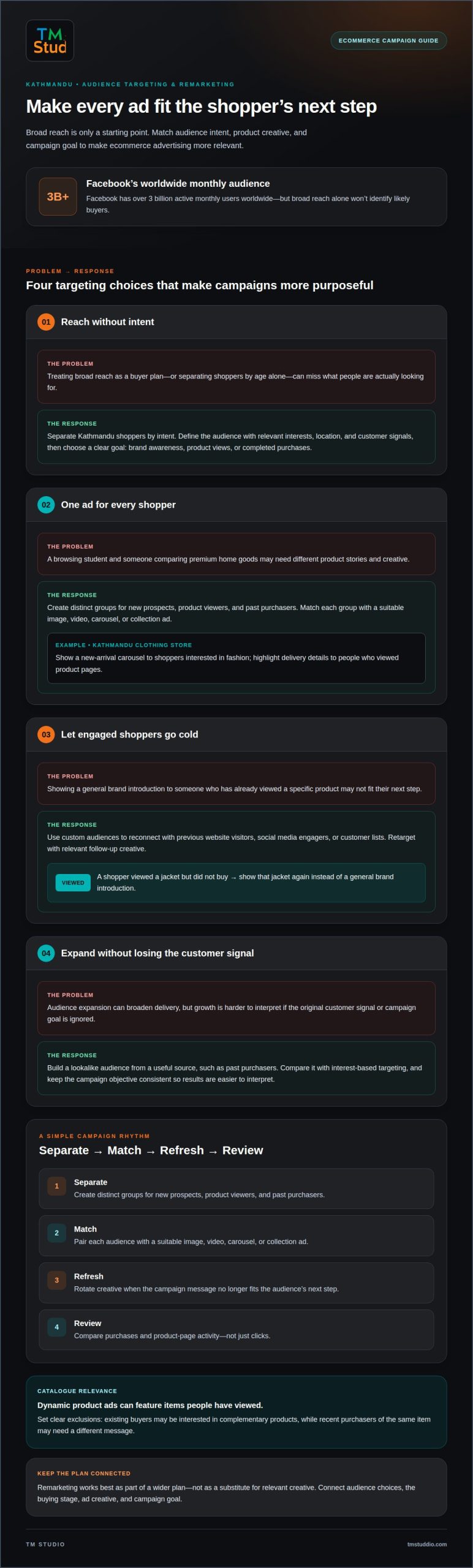
Start by separating Kathmandu shoppers by intent, not by age alone. A student browsing affordable accessories needs different creative from someone comparing premium home goods. Facebook has over 3 billion active monthly users worldwide, but broad reach alone won’t identify likely buyers. Set each campaign around a clear goal, such as brand awareness, product views, or completed purchases.
Build targeting in layers. First, define your audience using relevant interests, location, and customer signals. Then match each ad to the product and buying stage. A Kathmandu clothing store, for example, could show a new-arrival carousel to shoppers interested in fashion, then highlight delivery details to people who have viewed product pages.
Custom audiences help reconnect with people who already know the store. They can include previous website visitors, social media engagers, or customer lists. Retargeting uses these audiences to show relevant follow-up ads. Someone who viewed a jacket but did not buy, for example, could see that item again instead of a general brand introduction.
Lookalike audiences can help reach new people who share patterns with an existing customer group. Start with a useful source, such as past purchasers, then compare the audience with interest-based targeting. Keep the campaign objective consistent to make results easier to interpret. Audience expansion can broaden delivery, but the original customer signal still matters.
Use these steps to make the targeting plan actionable:
- Separate: Create distinct groups for new prospects, product viewers, and past purchasers.
- Match: Pair each group with a suitable image, video, carousel, or collection ad.
- Refresh: Rotate creative when a campaign’s message no longer fits the audience’s next step.
- Review: Compare purchases and product-page activity, not just clicks.
Dynamic product ads can feature items people have viewed, helping ecommerce campaigns stay relevant across a catalogue. Set clear exclusions, too. Existing buyers may be interested in complementary products, while recent purchasers of the same item may need a different message. This lets targeting support discovery and repeat sales without treating every shopper alike.
Monthly Facebook Ads management packages
Before hiring an agency, prepare your product catalogue, stock details, margins, and delivery information. Set a campaign goal, such as product sales or traffic, and gather existing creative assets and tracking access. A Kathmandu clothing store, for example, can identify priority products and decide who will approve new ads.
Monthly packages can differ in campaign scope, creative production, tracking, and reporting. Compare the work included, not just the package name. Before launch, agree on campaign objectives, approval steps, and reporting frequency. A clear strategy connects awareness, traffic, and sales goals to suitable advertising activity.
Campaign management also needs active review. The described process monitors campaigns closely during the first 72 hours after launch, then reviews creative and audiences weekly. Those checkpoints help identify delivery issues and guide adjustments using campaign performance, rather than making changes without a clear reason.
When planning payments in Nepal, distinguish Meta ad account billing from an agency’s management fee. Review the billing currency and payment method shown in the account, and allow for any currency conversion handled by your payment provider. Keep campaign reporting consistent with your business records, including Nepali customer sales and the currency used for internal reporting.
Protect account access by assigning permissions through Meta Business tools instead of sharing personal passwords. Give the agency only the access needed for its work, enable two-factor authentication on user accounts, and remove permissions when the engagement ends. This keeps ownership and control with your business.
Before work starts, confirm who supplies product images, videos, and copy, and how approvals will work. A simple monthly plan can name the campaign owner, reporting dates, creative responsibilities, and billing contact. These decisions help an ecommerce team coordinate advertising while keeping stock and fulfilment in view.
Agency discovery and comparison
A directory lists 19 companies in Nepal that provide Facebook advertising services. That gives Kathmandu ecommerce businesses options, but a directory entry alone won’t show how an agency works. Compare potential partners against your product category, business goal, and preferred way of working before discussing campaign details.
A Facebook ad agency for ecommerce in Kathmandu should connect its proposal to your store’s needs. A clothing shop and a homeware seller need different product stories, creative choices, and sales measures. Review relevant examples and ask how the proposed campaigns support your objective. Useful examples explain the campaign’s purpose, not just how its ads look.
Use a consistent comparison checklist:
- Relevant experience: Does the agency show ecommerce work, rather than only lead generation examples?
- Creative process: Can it explain how product images, copy, and formats support the campaign goal?
- Measurement: Does reporting connect advertising activity with meaningful business outcomes?
- Communication: Are responsibilities, approvals, and update schedules clearly described?
Look for a partnership that keeps your team involved. You bring product knowledge, stock context, and customer priorities. The agency should turn those inputs into a clear plan, explain its decisions, and make performance data understandable. That makes collaboration more useful than receiving reports without context.
When comparing a Facebook ad agency for ecommerce in Kathmandu, examine the scope behind each proposal. Agencies in Nepal may differ in whether they include campaign setup, creative production, or tracking reviews. Request written deliverables and reporting details so you can compare equivalent work and understand what your team needs to contribute.
Settle account ownership and permissions before work begins. Your business should retain control of its Facebook assets and billing access. Agree on who can publish ads, approve changes, and manage access if the partnership ends. These details protect continuity and keep campaign decisions transparent.
What Facebook advertising services do Kathmandu ecommerce agencies offer?
Facebook advertising can support brand awareness, lead generation, website traffic, and sales. For an ecommerce store in Kathmandu, campaign planning often starts by matching an objective to a business priority. A new shop might focus on awareness first, while a store with steady product views may prioritise purchases.
Campaign planning turns that goal into audience choices, placements, budgets, and creative direction. Agencies can set up image, video, carousel, collection, or text ads. A shoe retailer, for example, could use a carousel to feature several designs and direct shoppers to product pages. Facebook Marketplace can also showcase products to consumers.
Creative development translates product value into clear, useful ads. This can involve selecting product images, writing concise copy, and adapting assets for different placements. A Kathmandu homeware seller could highlight a product’s use in a short video, then use a collection format to present related items.
Campaign services can also include tracking and performance reviews. Agencies may monitor delivery, clicks, and sales signals to assess whether the chosen objective aligns with business results. Agree on a reporting schedule and ask for reports that explain what changed and why, not just totals.
- Awareness: Introduce a product range to a defined audience.
- Traffic: Bring interested shoppers to relevant product pages.
- Sales: Connect product-focused ads with purchase actions.
- Lead generation: Collect enquiries when a product needs consultation before purchase.
These services work best as connected parts, not isolated tasks. A campaign needs a clear objective, relevant creative, and tracking that reflects the intended action. If your product visuals need a sharper advertising role, plan ecommerce ad creative around the products and shoppers you want to reach.
TM Studio
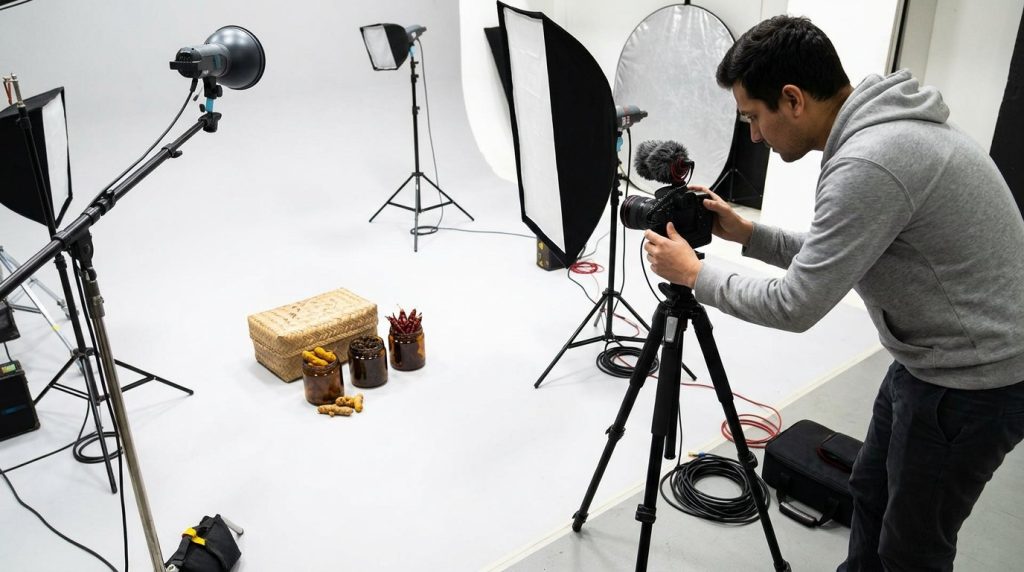
TM Studio can support your ecommerce growth when product visuals need to work harder across advertising and social channels. Photography and videography help present products clearly, while 360° Ads Boost supports broader campaign visibility. Search Engine Optimization can complement paid activity by helping customers discover your products through search.
Turn to TM Studio when you need stronger product imagery, video assets, or a connected approach to online visibility. A Kathmandu retailer launching a new product range, for example, can use Photography and Videography to build a consistent visual library and show products in use. These assets give campaigns more creative options while keeping the product story clear.
Share your business goals and the products you want to promote, then discuss which services fit your marketing priorities. Contact TM Studio to talk through your ecommerce needs.
Shape your next ecommerce campaign
Your next campaign can support a more recognisable brand, not just another burst of promotion. Decide what you want shoppers to remember and what action should follow. That focus gives your creative and campaign decisions a clearer commercial direction.
Choosing a Facebook ad agency for ecommerce in Kathmandu is most useful when you want campaign execution to support wider marketing priorities. TM Studio’s Photography and Videography services can help create product-focused visuals, while Search Engine Optimization can support visibility through search. Each contributes differently, so align the work with your current growth priorities.
Bring your campaign goals and product priorities into the conversation, then identify the support that fits your next step. Contact TM Studio about Facebook Ads to discuss your ecommerce goals and move forward with clarity.
Frequently Asked Questions
Do you handle ad creative (images/videos)?
TM Studio offers Photography and Videography for commercial and promotional content. A Kathmandu clothing store, for example, can use product photos for catalogue ads and video to show how garments look in motion. Share the products, audience, and campaign objective so the creative direction supports your message. Keep product details and current stock information ready when preparing assets.
How do you track sales?
Sales tracking connects ad interactions with completed purchases, using website events and order records. Ensure the purchase event captures useful details, such as order value, so campaign reporting reflects more than clicks. For phone sales or CRM-qualified leads, upload the resulting information within 24 hours to help optimization reflect real NPR revenue. Compare ad reporting with actual orders to spot gaps.
What is the minimum budget I need?
For Nepal, the recommended minimum Facebook ad spend is NPR 1,000 per day. Treat this as media spend paid to Meta, separate from agency management fees. Your usable budget also depends on the product price, campaign objective, audience size, and how much time the campaign needs to gather useful performance signals.
Which agencies in Kathmandu specialize in Facebook ads for ecommerce businesses?
TM Studio offers Performance Marketing and 360° Ads Boost for digital advertising campaigns. A directory lists 19 companies in Nepal providing Facebook advertising services, so Kathmandu businesses can find multiple options. For an ecommerce brief, focus the discussion on campaign objectives, product catalogue needs, sales measurement, and creative requirements. TM Studio also serves Kathmandu, Bhaktapur, and Lalitpur.
How much do Facebook ad agencies in Kathmandu charge for management and setup?
Management and setup fees depend on the scope of work, so contact TM Studio for a custom quote. Key factors include campaign complexity, the number of campaigns, creative production needs, tracking requirements, and reporting. Keep agency fees separate from Meta advertising spend when planning your total budget, so each cost is clear in your business records.
What is the typical minimum monthly ad spend for ecommerce Facebook campaigns in Nepal?
A starting monthly Meta ad spend of NPR 15,000 to NPR 30,000 is recommended for a small Nepali business testing advertising. This is the campaign budget, not an agency fee. The right starting amount depends on the product range, sales objective, and available creative. Set a clear test plan so each campaign has a defined purpose and useful measures.