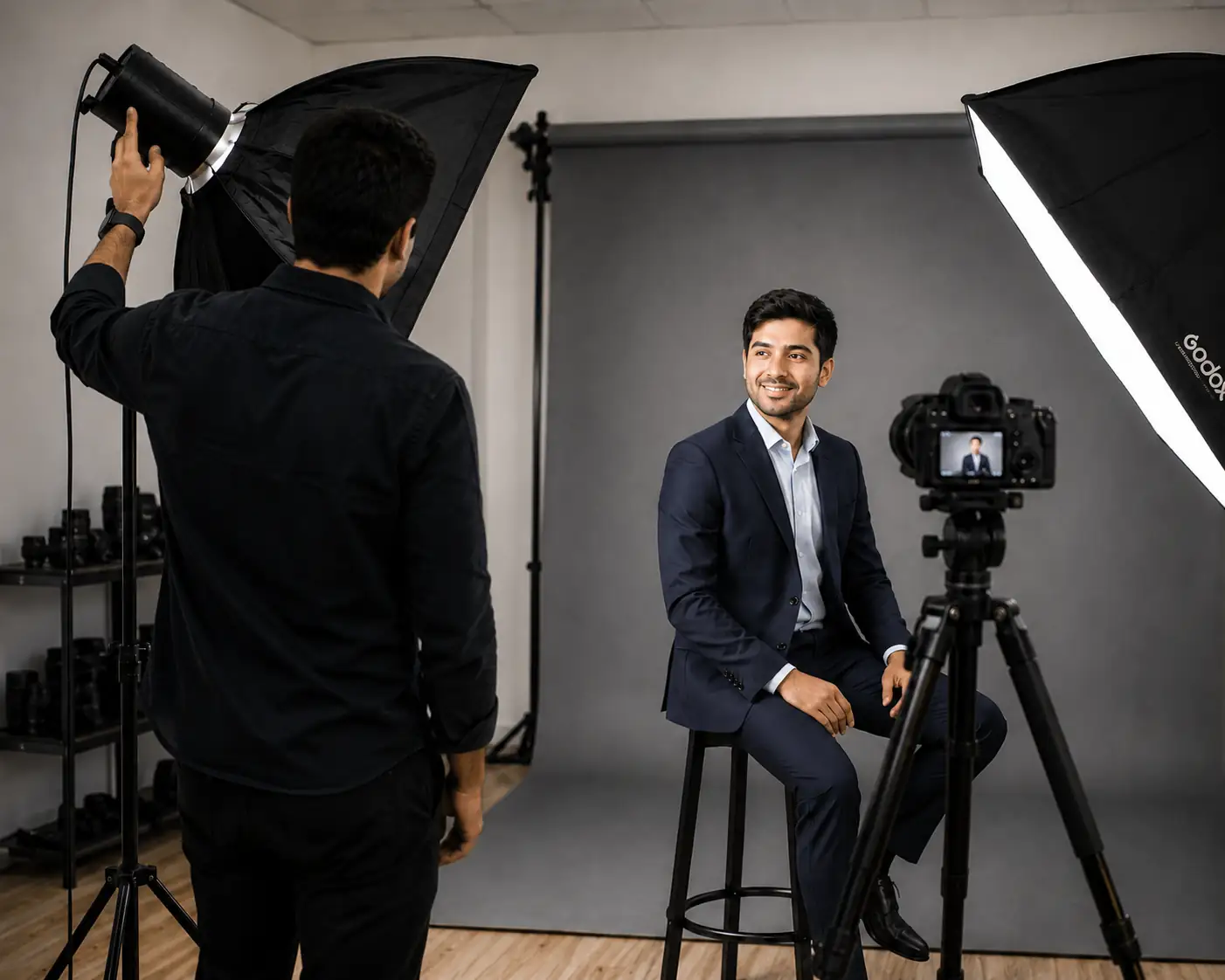

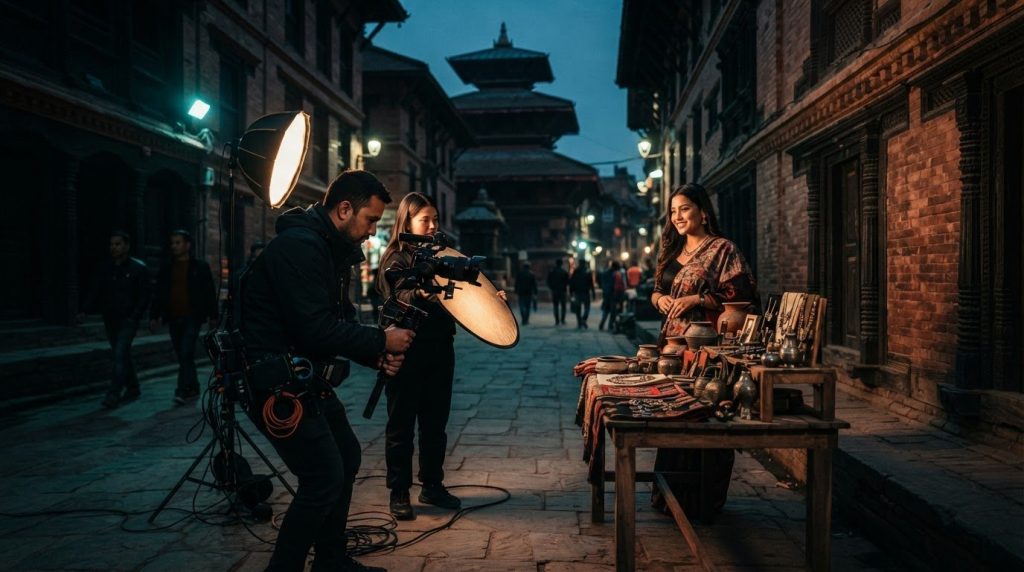
A commercial shoot in Nepal doesn’t have to stay inside a studio. The right setting might be a Kathmandu street, a studio space, or a location beyond the capital, depending on your brand and production needs. Patan, 5 kilometers from Thamel, offers a street-photography setting, while access and permits should be considered as part of location planning.
Strong commercial photography needs more than an attractive backdrop. Location, light, travel, and production logistics all shape the final images and the shoot itself.
This guide explains how commercial photography in Nepal supports advertising, what kinds of locations can bring a campaign to life, and how permits and access work in controlled environments. You’ll also learn what to plan around, from seasonal conditions and crew access to combining still photography with film. That context helps you choose a setting that fits the campaign and prepare for a smoother production.
Key Takeaways
- Align the photography concept with the campaign’s audience and intended use so each image supports a clear advertising goal.
- Compare locations across Nepal by visual fit and practical production needs before committing to a shoot plan.
- Plan location access early, especially for heritage sites, protected areas, restricted regions, and other controlled environments.
- Choose a photographer or studio based on the creative deliverables and production support your campaign requires.
Advertising and commercial photography
Commercial photography in Nepal turns a campaign idea into images for a defined audience and channel. Start with one objective: introduce a product, explain a service, or build brand recognition. That decision shapes the visual concept, talent, props, and final image selection. For example, a tea brand might need product close-ups, serving scenes, and portraits of growers. Each image should reinforce the same campaign message.
Next, map the images to their intended placements. A product launch may need clean product shots for online listings, lifestyle scenes for social campaigns, and portraits for a brand story. Prepare a shot list that identifies each scene, subject, framing, and format. This keeps creative decisions tied to the brief and helps the team capture useful assets. If the campaign also needs video, plan the photography and filming together so the crew, equipment, lighting, and schedule work as a whole.
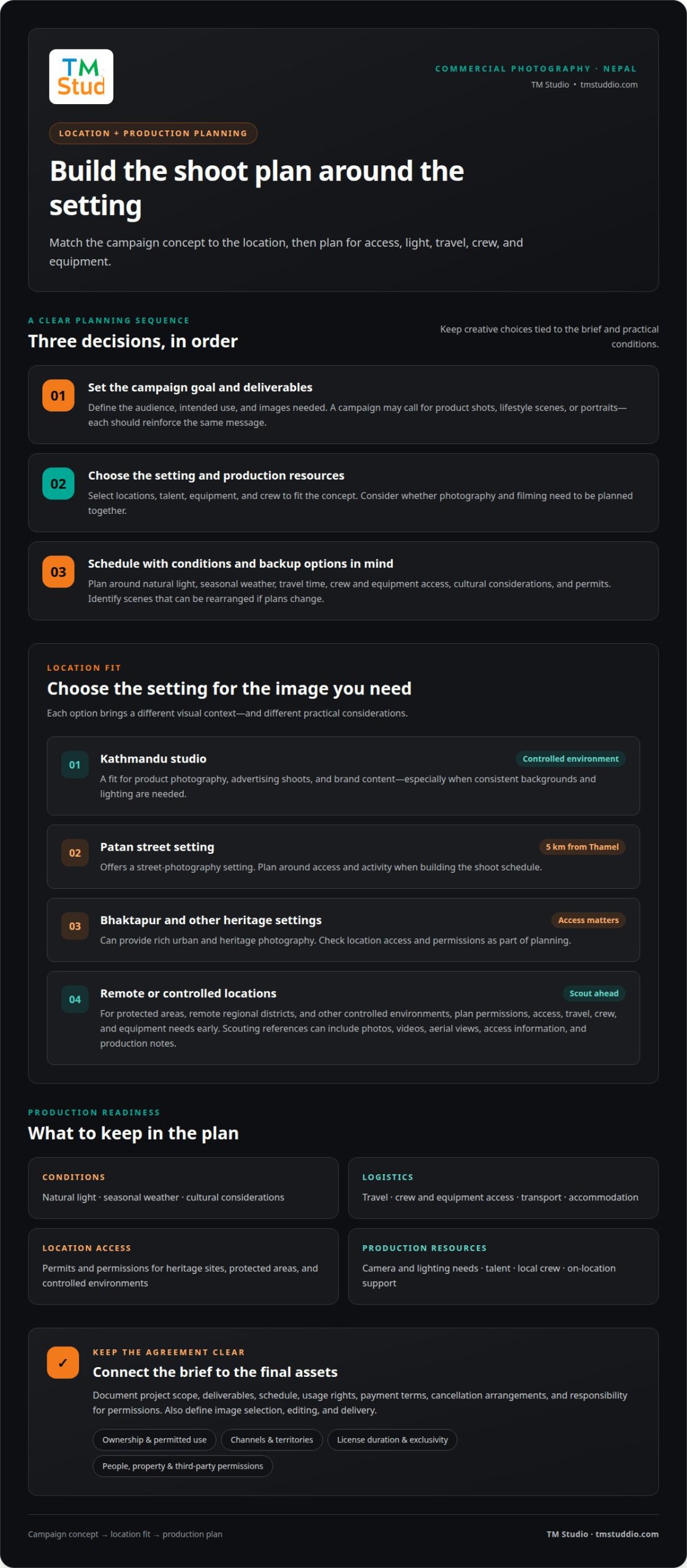
Build the production plan around Nepal’s practical conditions. Natural light, seasonal weather, travel time, crew and equipment access, cultural considerations, and permits can all affect the shoot. Larger productions and remote shoots are best planned as early as possible. A Kathmandu setup may need different timing and logistics from a shoot outside the capital. Include a contingency plan for weather or travel changes, and identify which scenes can be rearranged without disrupting the campaign.
For international productions, visiting teams can bring their photographer, creative director, and agency team while using local production and logistics support. Casting can include models, actors, performers, and other talent, including outside Kathmandu. Plan the key decisions in sequence:
- Set the campaign goal, audience, and image deliverables.
- Choose locations, talent, equipment, and crew around the concept.
- Schedule scenes with light, weather, travel, permits, and backup options in mind.
This approach gives each production choice a clear purpose. It also helps align the creative concept with the practical conditions before shooting begins.
Commercial photography locations across Nepal
Choose a Nepal location for its campaign value and production fit, whether working locally or deploying across the country. While based in Kathmandu, Bhaktapur, and Lalitpur, TM Studio regularly executes shoots nationwide, from urban centers to remote regional terrains. Patan, just 5 kilometers from Thamel, offers a street-photography setting. Kathmandu studio space can support product photography, advertising shoots, and brand content. A controlled studio environment suits products needing consistent backgrounds and lighting. Street scenes offer a different visual context, but require planning around access and activity.
For heritage sites, protected areas, remote regional districts, and other controlled environments, permissions and access shape the production plan. Location scouting can establish practical details in advance, especially for projects reaching far beyond the Kathmandu Valley. References may include photographs, videos, aerial views, access information, and production notes. Use them to compare the visual concept with travel, crew, and equipment needs across diverse terrains.
Set copyright and image licensing terms out in a written agreement. Define ownership, permitted channels and territories, license duration, exclusivity, and any limits on editing or reuse. Also specify permissions for recognizable people, private property, and third-party material.
Equipment, crew, and production costs depend on the shoot’s scale and location. Budget for camera and lighting needs, talent, local crew, transport, accommodation, and access requirements. Remote settings outside the main cities can affect logistics and equipment choices, so include them in the production plan.
A commercial photography agreement should identify the project scope, deliverables, schedule, usage rights, payment terms, cancellation arrangements, and responsibility for permissions. It should also explain how images will be selected, edited, and delivered. Clear terms connect the creative brief to the final assets.
- Studio: Plan controlled product or advertising scenes in Kathmandu.
- Street setting: Consider Patan and Bhaktapur for rich urban and heritage photography.
- Controlled locations: Build permissions and access into the schedule.
- Remote shoots: Use scouting notes to plan travel, logistics, and production needs across Nepal.
For campaign-specific image planning, explore commercial photography planning.
TM Studio can coordinate commercial photography production across Nepal, including location scouting, permits, casting, local crew, equipment, lighting, transport, accommodation, and on-location support. These production elements can be considered together when planning a commercial shoot, from preparing for a remote regional location to arranging the resources and support needed on location. This coordination may help keep location and production needs in view as the campaign’s photography requirements are organized.
Which commercial photography studios and agencies operate in Kathmandu and other Nepalese cities?
A studio shoot can suit product photography, advertising, and brand content when the brief calls for controlled scenes, such as packaging images or a consistent product range. For campaigns needing street scenes or landscapes, consider how outdoor settings fit the visual concept. TM Studio offers both studio and outdoor options for photography and videography.
Some projects focus on studio photography; others need outdoor settings and coordinated production. Match the creative brief to the required images, location, crew, and equipment. For international teams working with local production support, clarify responsibilities and how the visiting creative team will coordinate with the people handling production on the ground.
Outside Kathmandu, planning should account for travel, equipment movement, crew access, and location conditions. Casting can include models, actors, performers, and other talent beyond the capital. For a shoot in another Nepalese city, define which decisions need local support and which remain with the visiting creative team. Ask for a production plan that links each scene to its location, schedule, crew, and required equipment. This makes the operational scope easier to assess.
- Studio-led: Match Kathmandu studio facilities to products and controlled scenes.
- Agency-coordinated: Align creative direction with production logistics.
- Regional production: Plan travel, crew, equipment, and talent around the chosen city.
- International team: Separate visiting creative roles from local production support.
Before choosing a setup, share the campaign brief, intended locations, and required image formats. Then compare proposed production responsibilities, not just the portfolio. A studio-focused assignment and a regional campaign require different coordination. For Nepal-wide work, a clear plan helps connect the visual concept with practical delivery.
One photographer spent a month in India before stopping in Kathmandu, Nepal, and spent One week taking street photographs in Kathmandu, Nepal. This example adds a street-photography perspective to the city’s range of possible production needs. It also shows how a photographer’s work in Kathmandu may follow travel elsewhere and take place over a defined period, considerations to clarify when discussing locations and scheduling with a production provider.
How do I hire a commercial photographer in Nepal?
Start with a campaign brief, not a camera list. Define the audience, message, intended channels, and images required. A Kathmandu product shoot may need controlled product frames, while a regional campaign may require travel and location planning. State whether the project needs still photography alone or coordinated film production. This scope helps clarify the creative direction, team, equipment, schedule, and access needs.
Review portfolios for work resembling your intended campaign. Product photography, portraits, and location-led brand imagery call for different visual approaches. Then discuss the brief, intended locations, and deliverables with the production team. Larger commercial productions and remote shoots in Nepal are best planned as early as possible. Early planning gives the team room to coordinate scouting, talent, crew, equipment, transport, and accommodation.
Include permissions in the production plan. Heritage sites, protected areas, restricted regions, and other controlled environments may require coordinated access. Aerial photography using drones or helicopters depends on location, weather, permissions, and operational requirements. Consider these factors before setting the schedule or shot list. Also account for seasonal weather, natural light, travel time, cultural considerations, and contingency options.
Use this sequence to move from brief to shoot day:
- Define deliverables: List subjects, formats, campaign channels, and whether film is included.
- Shortlist the creative approach: Match portfolio examples to the brand’s visual direction.
- Map production needs: Connect each scene with a location, talent, crew, equipment, and transport plan.
- Coordinate access: Build required permissions and location information into the schedule.
- Set contingencies: Plan alternatives for weather, travel changes, or location constraints.
For locations beyond Kathmandu, advance scouting can provide photographs, videos, aerial references, access information, and practical production notes. Use these details to refine the brief before deciding the scene order. A clear workflow connects the creative concept with on-the-ground requirements and helps the team prepare.
Plan your commercial photography Nepal shoot around the campaign brief, locations, and production needs with TM Studio.
TM Studio: Search Engine Optimization
TM Studio can connect campaign photography with a stronger digital presence through Search Engine Optimization. Turn to the team when you’re planning brand photography for business branding and want them supported by relevant online content. Photography and videography can help create assets for digital campaigns, while 360° Ads Boost supports advertising activity. Search Engine Optimization services in Nepal helps businesses strengthen their visibility in search; it works alongside visual content rather than replacing a clear campaign strategy.
For example, a Nepal-based brand can plan product photography and campaign content around the audiences it wants to reach online. Aligning the creative brief with the marketing objective gives each asset a defined role across the campaign. Build trust with brand photography by using consistent, human-centered visuals across digital channels.
Contact TM Studio to discuss photography and search visibility for your campaign.
Shape Your Next Campaign With Intent
Make your next visual campaign a deliberate step in your brand’s growth. Before production begins, decide what you want people to understand, remember, or do after seeing the images. That focus can guide creative choices and keep the finished work relevant across your marketing channels.
Commercial photography in Nepal can give a brand a distinctive visual voice, but the direction should start with a clear business purpose. Consider how each image will support that purpose beyond launch day. A consistent creative approach can help build recognition as campaigns evolve.
TM Studio brings photography, videography, content creation, and digital marketing together to support brand campaigns. Share your goals and visual priorities with TM Studio to discuss a practical next step.
Contact TM Studio about your shoot, and move your next campaign forward with confidence.
Frequently Asked Questions
What commercial photography services are available in Nepal?
Commercial photography includes product, corporate, event, branding, and promotional images. A retailer might need product photos for digital campaigns, while a hospitality business could use property and team images. TM Studio provides Photography Services and Videography Services for commercial branding and promotional campaigns in Kathmandu, Bhaktapur, and Lalitpur. Match the deliverables to your channels and intended audience.
What permits are required for commercial photography in Nepal?
Permission planning depends on the location and its access conditions. For heritage sites, protected areas, restricted regions, and other controlled environments, arrange permissions before finalizing the schedule. Identify the access process, share the production plan, and account for crew and equipment movement. Keep permission details with the production documents so the team can plan around site requirements.