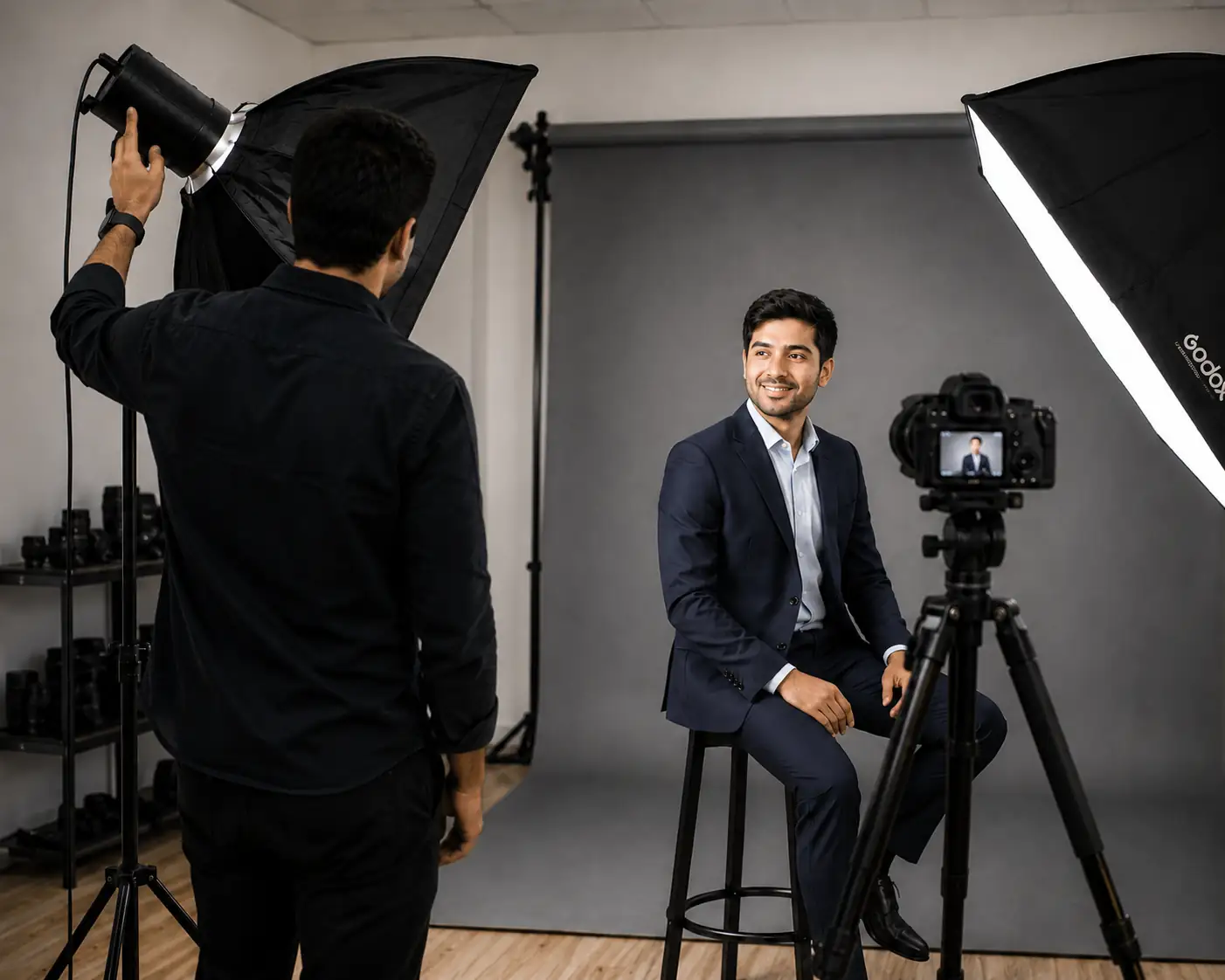


A promotional video earns its place when it makes your message easier to see, understand, and remember. Promotional video production in Nepal turns a marketing goal into a planned, filmed, and edited video for a specific audience and channel. The work moves through pre-production, production, and post-production, with each stage shaping the final message and viewing experience.
Attractive footage alone is not enough: a video should support a clear business goal. This article explains how production works, how to choose between ads, testimonials, explainers, and tutorials, and what each format can bring to a project. It also shows how video can fit into your marketing, from building awareness to helping potential customers understand what you offer.
Key Takeaways
- Start with a defined audience and marketing goal so the video’s message, visuals, and call to action work together.
- Understand how planning, filming, and editing each shape the final video and its fit for your campaign.
- Choose a format that matches the message, whether you need to demonstrate a product, explain an idea, or build trust.
- Connect video content to your wider marketing strategy and assess its contribution through relevant campaign metrics.
What is Video Production and what are its benefits for your projects?
Video production turns a marketing goal into planned footage, sound, editing, and a finished message. For filming at private or managed locations in Nepal, obtain permission from the owner or site manager. Public and restricted sites may also have specific access conditions.
Pre-production Planning
Pre-production covers the work completed before cameras roll, from understanding the audience to planning shots. Early decisions shape the script, schedule, locations, and production needs. A café in Kathmandu promoting a new menu, for example, can identify its target diners, select signature dishes, plan close-ups, and decide on a call to action before filming. That preparation keeps each scene connected to the campaign goal.
Commercial Video Ad Production
Commercial video ad production turns the plan into a focused piece for a defined audience and digital placement. The creative approach establishes a hook, a benefit, supporting proof, and a next step, then captures scenes that make the offer easy to grasp. A trekking company might pair route footage with a clear booking message. Planning framing and pacing for phone screens helps a video communicate quickly in social feeds.
Production captures the planned visuals and audio. In post-production, the editor selects takes, arranges scenes, balances sound, and adds titles where useful. Each stage connects the concept to the finished video. A missed product detail or unclear spoken line can weaken the final edit, so review whether the video supports its objective, keeps the message legible, and suits its intended channel.
A clear objective shapes what a video can do: a product demonstration can show how an item works, while a founder-led clip can put a human voice behind a brand. Promotional video production in Nepal can also adapt a core idea into versions for social posts, a landing page, or a campaign when the footage and message suit those uses. Define the intended outcome first, such as explaining a service or prompting inquiries, then match the script and visuals to it.
Pre-production, production, and post-production
A promotional video moves through pre-production, production, and post-production. Each stage affects how clearly the finished edit reaches its audience.
Editing and Sound Design
Editing and sound design shape raw footage into a clear, cohesive story. Pacing, audio, and visual effects affect how easily viewers follow the message. Editors select usable takes, arrange scenes, balance dialogue with music, and add titles when they improve understanding. For a hotel video, room details, guest facilities, and location footage can create a logical viewing journey. The final cut should communicate the intended message without distracting effects.
Production Timeline
A promotional video’s timeline depends on its scope, filming locations, script readiness, and editing needs. A single-location product video has different requirements from a multi-location brand story with interviews and several scenes. Travel between locations, site access, weather, and participant schedules in Nepal can also affect filming plans. Editing time depends on the amount of footage and feedback required. Set a launch date early so each stage can be planned around it.
Planning and Production Steps
A clear sequence turns the campaign goal into a finished video. First, define the audience, message, platform, and desired action. Then develop the script, shot list, schedule, and location plan. Production captures the planned scenes and audio. Post-production selects the footage, shapes the story through editing, refines the sound, and prepares the final version for its intended channel. This process keeps creative choices tied to the marketing purpose.
Clear decisions at each handoff reduce avoidable rework. For example, agreeing on the main message before scripting helps the team prioritize essential scenes. Sharing the intended digital placement early guides framing, titles, and pacing. A content creation approach can also align the video’s message with related campaign materials. For a coordinated production process, explore content creation for promotional campaigns.
Video formats including ads, testimonials, explainers, and tutorials
Choose a format that matches the message to its audience and viewing context. A product launch, customer story, and staff update each call for a distinct visual approach.
Short-Form and Long-Form Videos
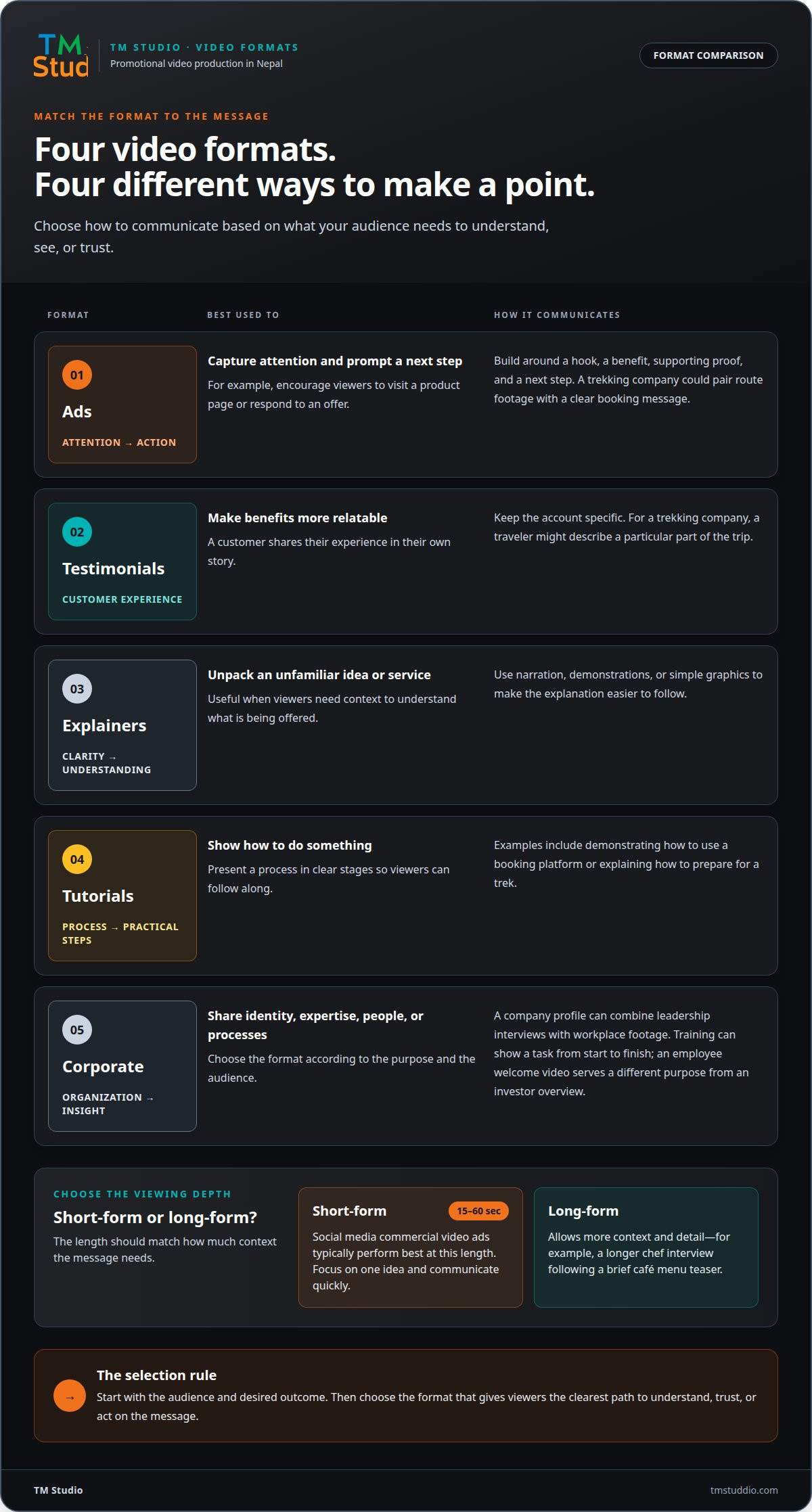
Short-form videos deliver one focused idea quickly, while long-form videos allow more context and detail. This choice matters because viewers may encounter a clip on a phone screen or settle in for an in-depth explanation. Social media commercial video ads typically perform best at 15 to 60 seconds. A café can use a brief menu teaser, then share a longer chef interview for added context.
Ads aim to capture attention and prompt an action, such as viewing a product page. Testimonials share a customer’s experience to make benefits more relatable. Explainer videos unpack an unfamiliar service through narration, demonstrations, or simple graphics. Tutorials show a process in clear stages, such as using a booking platform. Each format offers a different way to make the message accessible.
Corporate Video Purposes and Formats
Corporate videos communicate an organization’s identity, expertise, people, or processes. The format should suit the purpose: an investor overview needs different evidence from an employee welcome video. A company profile can combine leadership interviews with workplace footage, while a training video can show a task from start to finish. Clear visual choices help viewers understand what the organization does and why it matters.
For a Nepal-based trekking company, a destination film can show landscapes and guide expertise, while a safety tutorial can explain how to prepare. A testimonial can feature a traveler describing a specific part of the trip. These formats can serve different campaign stages, from introducing a brand to answering practical questions. Select the format that gives the intended audience the clearest path from interest to understanding.
Video production services for marketing
Marketing video works best when production serves a campaign goal, not just a visual idea. A Nepalese trekking company, for example, could use one film to introduce a destination and shorter edits to promote seasonal trips.
What a promotional video project in Nepal involves depends on the agreed scope. It may include concept development, scripting, filming, editing, graphics, and delivery in formats suited to selected channels. The number of locations, interview requirements, visual effects, and edit versions all shape the production.
Connect the video’s purpose to its place in the customer journey. An awareness ad can introduce a service; a product demonstration can explain its features; a testimonial can share a customer perspective. Each format needs a clear audience, message, and next step. Without those decisions, polished visuals may not move the campaign forward.
Plan how the finished video will work across marketing channels. A hotel, for example, might use a destination film on its landing page, then adapt selected footage into social media ads. Prepare a concise brief covering the campaign objective, audience, key message, intended platforms, and action viewers should take. This gives scripting and editing a consistent direction.
After launch, assess performance against the campaign goal. Watch time can indicate whether viewers stay with the video, while engagement and click-through rate show how they respond. For campaigns focused on sales or inquiries, conversion rate and cost per result provide additional context. Brand recall and sentiment offer different signals when the aim is awareness rather than an immediate action.
Connect production to distribution, then use campaign results to guide future creative decisions. If your next campaign needs a video concept, script, and channel-ready content, plan promotional content for your campaign.
TM Studio: Videography
TM Studio provides Videography Services for businesses that need purposeful visual content for marketing. Use the service when a campaign goal, product, or story needs to come across on screen. A focused brief describing your audience, message, and intended channel helps shape the video’s direction.
Video can also work alongside TM Studio’s photography, social media marketing, and performance marketing, helping connect creative assets with campaign distribution. For businesses building online visibility, Search Engine Optimization can support the wider digital strategy, while 360° Ads Boost is another available offering. The right combination depends on your project’s aims and the role video should play.
Bring your video idea and campaign objectives to TM Studio to discuss the next step. Contact TM Studio to start the conversation.
Turn Your Video Idea Into a Campaign Asset
Give your next video a purpose beyond filling a content calendar. A clear campaign objective can guide the visuals and show how the finished piece fits your wider digital presence. For promotional video production in Nepal, start by defining what you want viewers to understand or do, then shape the project around that purpose.
TM Studio’s Videography Services bring business stories and campaign ideas to the screen. Photography can complement video with still images, while Search Engine Optimization can support the visibility of broader online content. Each service has a distinct role in a connected marketing approach.
Bring your idea, intended audience, and campaign objective into the conversation. Contact TM Studio about your video project and take the next step toward content built around your goals. Your next campaign can start with one clear idea.
Frequently Asked Questions
How to choose the right video production company?
Choose a production partner whose visual approach suits your campaign goal and audience. A tourism brand may need destination footage, while a retailer may prioritize clear product details. TM Studio provides Videography Services for commercial branding and promotional campaigns in Kathmandu, Bhaktapur, and Lalitpur. A clear brief connects the creative direction to the business purpose.
Why use promotional videos?
Promotional videos help businesses explain an offer through visuals, voice, and real-world demonstrations. A school in Kathmandu could introduce its learning environment, while a hospitality brand could show the experience guests can expect. Video can make abstract benefits easier to grasp and provide reusable content for digital campaigns. Its value depends on choosing a message that serves a defined audience and business objective.
What types of promotional videos do production companies in Nepal offer?
Common formats include commercial ads, customer testimonials, explainers, tutorials, corporate profiles, and event videos. A retailer might demonstrate how a product works, while an education provider could use a profile video to introduce its programs and campus. Nepalese brands can choose a format based on the story they need to tell, the audience they want to reach, and where the video will appear.
How much does promotional video production cost in Nepal?
Promotional video production pricing in Nepal depends on project scope and is provided after a quote request. Key factors include filming locations, scripting needs, production requirements, editing complexity, graphics, and the number of versions needed. A single-location product shoot differs from a campaign involving several locations and interviews. Contact TM Studio for a custom quote based on your video project’s intended deliverables.
How do Nepal promotional video companies compare on price, quality, and services?
Compare the scope behind each proposal, not just the headline price. Consider whether the creative concept, filming, editing, graphics, and channel-ready versions match your campaign needs. TM Studio’s Videography Services include commercial usage rights for video deliverables. Also consider whether the production approach suits your brand and the platforms where you plan to publish the finished content.
What should businesses check before hiring a video production company in Nepal?
Before production starts, define the campaign objective, audience, key message, platforms, deliverables, timeline, and review process. For a shoot across Kathmandu, Bhaktapur, and Lalitpur, location planning can shape the schedule and production approach. Put agreed costs, timelines, and work details in writing. Clarify which final files are included and how feedback will be handled, so expectations are aligned from the outset.