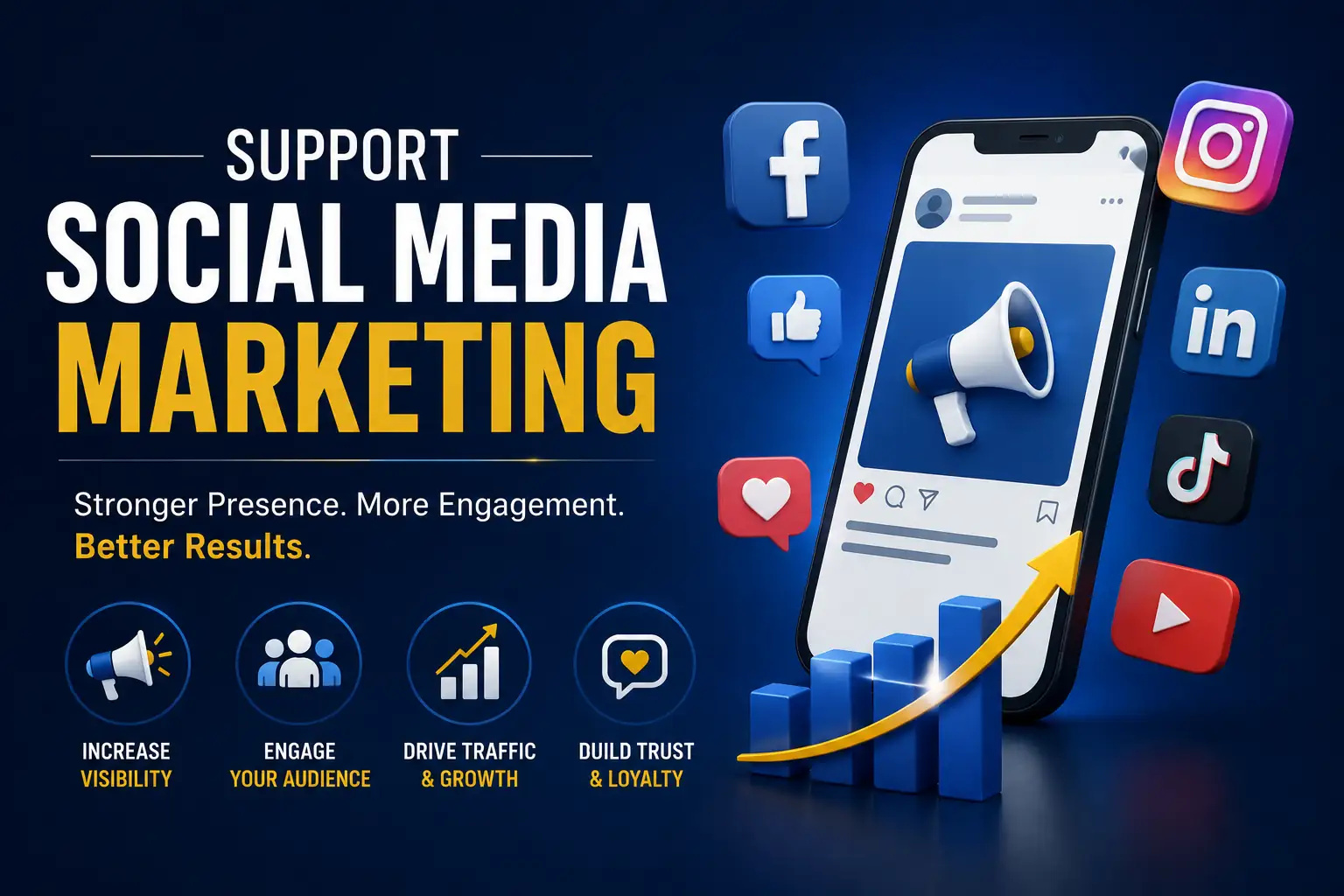

A Facebook ad can reach a large audience without generating useful enquiries or sales. For paid social media campaigns in Nepal, start with one clear objective, set up tracking before launch, and measure actions that matter to your business, not likes alone. This gives you a practical answer to the question, “How do I advertise my business on Facebook?”
It’s natural to focus first on the audience, creative, and budget. Those choices matter, but measurement connects them to business outcomes and shows what to improve. This guide explains how Facebook advertising works, what affects campaign costs, and how to track results such as clicks, enquiries, and sales.
You’ll also learn how targeting and creative influence performance, why campaigns often need ongoing optimization, and when a broader social media strategy can support growth. Use these insights to plan a campaign with a clear objective and a sound basis for decisions.
Key Takeaways
- Choose the social platform and audience that fit your business goal, then shape the campaign around that match.
- Set one main objective for each Facebook campaign and establish conversion tracking before launch.
- Separate advertising spend from campaign management costs, and assess package pricing by the work and scope involved.
- Track qualified leads and sales alongside clicks to spot what is working and guide campaign optimization.
Is Social Media Marketing Worth It for Businesses in Nepal?
Paid social media campaigns in Nepal can help businesses reach specific audiences and pursue measurable goals. Their value depends on matching the platform, message, and tracking to the action you want customers to take.
Paid Social Advertising and Campaign Optimization
Paid social advertising places sponsored content in front of selected audiences on platforms such as Facebook, Instagram, TikTok, and LinkedIn. Optimization means using campaign data to refine targeting, creative, or placement in support of your goal. For example, a Kathmandu retailer can compare which product image brings in more relevant enquiries, then adjust the campaign. This makes decisions more useful than simply counting views.
Advertising Goals for Nepalese Businesses
Online advertising goals are the specific outcomes a Nepalese business wants a campaign to support, such as awareness, enquiries, bookings, or sales. Choose one main goal for each campaign so its audience, message, and measurement stay aligned. A restaurant seeking reservations needs a different call to action from a clothing brand seeking online purchases. Clear goals also help an agency assess whether campaign changes are improving the outcome that matters.
Facebook Audience Targeting and Ad Strategies
Facebook audience targeting uses selected characteristics, interests, or behaviors to shape who sees an advertisement. Nepal has approximately 15 million active social media users, and Facebook is described as the country’s most popular platform, with millions of active users. Reach the right target audience by matching geography and interests to the offer, such as promoting a Kathmandu shop locally. Meta, TikTok, and LinkedIn payments use options available for each platform account; billing arrangements can differ. Nepal’s digital-ad tax and online-payment treatment depends on the transaction and applicable rules, so businesses should account for their billing setup.
Advertising Mistakes and Budget Waste
Common advertising mistakes include targeting too broadly, using the same creative for every audience, or optimizing for clicks when the goal is enquiries. These choices can spend budget on people unlikely to act. Test a focused audience with relevant creative, then compare qualified enquiries rather than likes alone. Nepal’s advertising regulations prohibit misleading product or service claims, so keep promises accurate. Make the offer clear in influencer partnerships and brand promotions, too.
How do I advertise my business on Facebook?
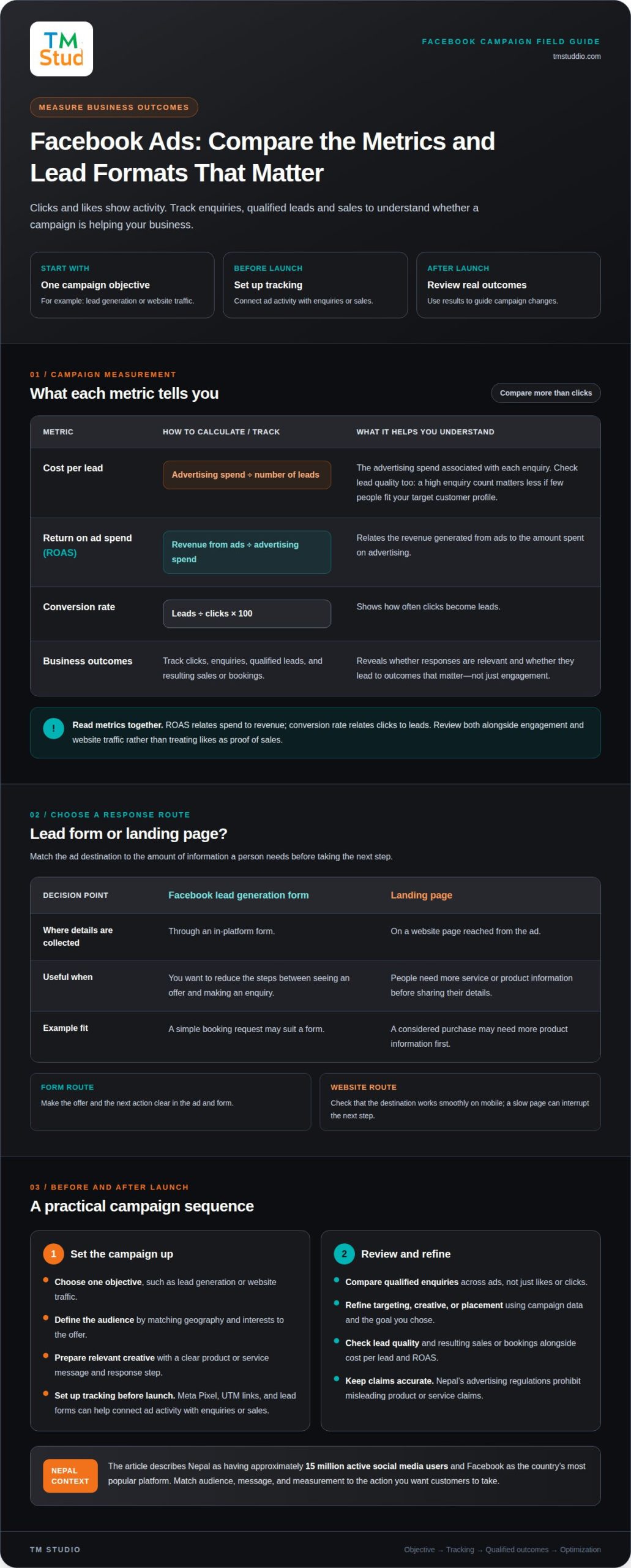
In Facebook Ads Manager, choose one campaign objective, such as lead generation or website traffic. Define the audience, prepare an ad with a clear product or service message, and choose how interested people should respond. For example, a restaurant could direct viewers to a reservation form rather than a general homepage.
Set up campaign tracking before launch. Meta Pixel, UTM links, and lead forms can help connect ad activity with enquiries or sales. Without conversion events, a report may show reach without revealing which ads generated business outcomes. Make sure the destination works smoothly on mobile, where a slow landing page can interrupt a potential customer’s next step.
Track cost per lead and return on ad spend
Cost per lead is advertising spend divided by the number of leads. If a Facebook campaign generates enquiries, this measure shows the spend associated with each one. Compare lead quality as well: a high enquiry count matters less if few people fit your target customer profile. Track advertising spend, clicks, enquiries, qualified leads, and resulting sales or bookings.
Return on ad spend, or ROAS, is revenue from ads divided by advertising spend. Conversion rate is leads divided by clicks, multiplied by 100. These measures answer different questions: ROAS relates ad spend to revenue, while conversion rate shows how often clicks become leads. Review both alongside engagement and website traffic instead of treating likes as proof of sales.
Turn Facebook responses into conversions
Facebook lead generation ads collect prospect details through an in-platform form. They can reduce the steps between seeing an offer and making an enquiry. A landing page, on the other hand, can explain a service before asking for details. Match the format to the decision: a simple booking request may suit a form, while a considered purchase may need more product information first.
Develop creative that makes the next action clear, then compare qualified enquiries across ads. For stronger social media campaign content, align the message, form, and follow-up process before increasing spend.
Social media marketing package pricing in Nepal
Social media marketing packages in Nepal can combine planning, creative production, publishing, and paid campaign management. Pricing depends on the project and is provided after a quote request. Key cost factors include the number of channels, content volume, production needs, campaign scope, and reporting. Compare the package scope, not just the number of posts, to understand what the work supports.
For a Nepalese business, choose a channel based on its audience and the action you want people to take. A local retailer might prioritize Facebook ads for targeted offers, while a visually led brand could use Instagram to present products. An agency can coordinate the campaign, but the goal, creative, and follow-up process still need to suit the business. Give each deliverable a purpose, such as awareness, enquiries, or sales.
Instagram marketing relies on strong visual storytelling. Photography, short videos, product demonstrations, and customer-focused captions can help brands explain what they offer. For example, a Kathmandu clothing shop could create a sequence featuring new arrivals, styling ideas, and a clear way to enquire. Consistent creative helps audiences recognize the brand across posts and ads.
Facebook advertising supports audience targeting and objectives such as lead generation. A business can tailor an offer to a defined audience, then assess whether the resulting enquiries are relevant. Keep the message and destination consistent: an ad promoting a booking should lead to a booking option, not an unrelated page. That connection keeps marketing in Nepal focused on business outcomes.
Influencer marketing can add a creator’s perspective to a campaign. In Nepal, micro-influencers with 5,000 to 20,000 followers have been identified as effective for marketing. Creator whitelisting lets a brand promote approved creator content as advertising, combining the creator’s voice with paid distribution. Agree on content use and campaign purpose before launch, then track whether the partnership helps generate leads or supports another defined goal.
Campaign performance analytics and optimization
Campaign analytics connect paid advertising activity with business outcomes. Separate brand awareness measures, such as reach and views, from conversion measures, such as enquiries or purchases. Instagram traffic may rise without generating qualified leads, so interpret each result in light of the campaign objective. A dashboard that reports only impressions cannot show whether a promotion moved customers closer to buying.
Before launch, define the events that indicate progress. Google Analytics 4 and Google Tag Manager can help measure website activity, while Meta Pixel and TikTok Pixel track platform campaign events. UTM links distinguish traffic sources; lead forms, call tracking, WhatsApp tracking, and purchase tracking can capture different response paths. Select the tools that match the customer journey, then keep campaign naming consistent across reports.
Attribution also shapes the story analytics tell. For service businesses, a 30-day click attribution window can capture enquiries that follow an ad after consideration. Review advertising spend, clicks, qualified leads, bookings, and campaign revenue together. A reported Facebook campaign promoting a TVC reached more than 134,000 views in two weeks, but views alone don’t show resulting sales. Pair awareness data with action data.
Optimization means using these signals to adjust creative, audience, placement, or destination. Change one major element at a time, then compare results against the same goal. One trekking agency project reportedly generated three times more inquiries with iPhone-shot trail videos than with professionally edited promotional reels. This illustrates why analytics should guide creative decisions rather than assumptions. Initial engagement and traffic may appear within a few weeks, while meaningful lead generation and conversion can take several months of consistent optimization.
Build a measurement plan that turns campaign analytics into clear next steps. Improve campaign tracking and optimization with a strategy tied to your business goals.
TM Studio: Social Media Marketing
TM Studio helps businesses plan social media marketing around clear campaign goals and audience needs. Turn to the team when you need a coordinated approach to campaign content, platform activity, and performance marketing rather than a series of isolated posts.
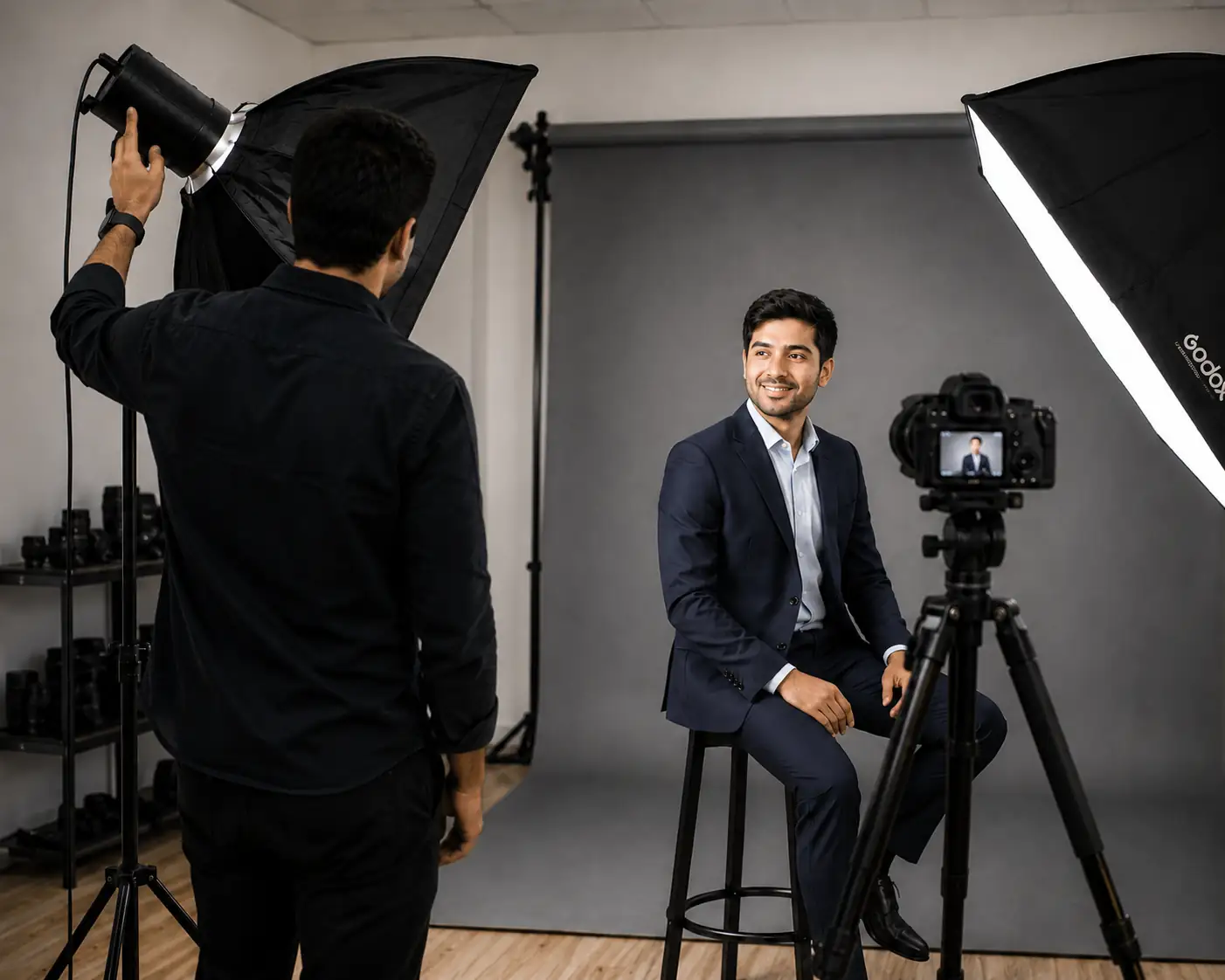
Photography and videography can provide relevant visual assets for campaigns, while social media marketing helps shape how those assets support your message. Search Engine Optimization can complement social campaigns by strengthening organic visibility and giving your wider digital presence another channel for discovery.
Share your business objectives, target audience, preferred platforms, and the actions you want customers to take. These details help shape an approach that connects creative work with measurable priorities, without treating likes as the only sign of progress.
Contact TM Studio to discuss social media marketing for your business.
Turn Campaign Insight Into Your Next Move
Make your next campaign a deliberate step toward growth. For paid social media campaigns in Nepal, identify the business outcome you want to influence, then build a plan that connects audience, creative, and measurement. Focus on learning from meaningful customer actions, not activity for its own sake.
TM Studio can support this approach with social media marketing, performance marketing, and content creation. Photography and videography help develop campaign-ready visuals, while Search Engine Optimization can strengthen organic visibility alongside paid promotion. Bringing these capabilities together can help your brand communicate consistently across customer touchpoints.
Start with a clear business priority and a practical view of what your team can support. Then shape a campaign around the people you want to reach and the next action you want them to take. Discuss your campaign with TM Studio and take the next step with focus and momentum.
Frequently Asked Questions
What types of content perform best on social media platforms in Nepal?
Images and videos are useful formats for Nepalese social campaigns, especially when they show a product or service clearly. A Kathmandu café, for example, could share a short dish-preparation video, while a trekking company could feature trail scenes. Match each creative to its placement and audience, then compare responses such as saves, enquiries, or bookings to learn which format supports the campaign goal.
What Is Online Advertising in Nepal?
Online advertising in Nepal means paying to promote a business, product, or service through digital channels. A company might use Facebook ads to introduce an offer, Instagram placements to showcase products, or LinkedIn ads to reach professional audiences. Unlike an unpaid post, paid advertising lets a business set campaign objectives and audience criteria, then review delivery and customer actions through platform analytics.
Which social media platforms are most popular for paid campaigns in Nepal?
Facebook is described as Nepal’s most popular social media platform, while businesses also use Instagram, YouTube, and LinkedIn to reach audiences. The right choice depends on the intended customer and creative format. A retailer may use Instagram product visuals, while a business selling professional services may consider LinkedIn. Choose channels based on audience fit and the action you want to encourage.
How much do Facebook and Instagram ads cost in Nepal?
There isn’t one fixed cost for Facebook and Instagram advertising in Nepal. The amount depends on the campaign objective, audience, duration, and competition for that audience. Separate the platform’s advertising spend from any campaign-management or creative-production fees. Set a spending limit that fits your plan, then assess whether the resulting enquiries or sales justify adjustments.
What is the minimum budget for a paid social media campaign in Nepal?
The practical minimum depends on the platform’s available budget settings and what the campaign needs to learn. A short test for local awareness has different requirements from a campaign seeking qualified enquiries across several audience groups. Start with a focused objective and manageable spend, then use delivery and conversion data to decide whether to continue, refine, or expand the campaign.
How do businesses target audiences by location, language, and interests in Nepal?
Businesses can define audiences using location, language, interests, demographics, and behavior options available in platform ad settings. A Lalitpur restaurant, for instance, could focus its promotion on nearby customers and use language suited to its intended audience. Keep targeting relevant to the offer, since overly broad settings can reach people unlikely to respond. Review enquiry quality to refine audience choices.