


A content creation agency in Nepal can bring strategy, writing, photography, videography, social media content and campaign support together in one plan. Monthly services suit a small business when the deliverables, platforms and production workload align with its goals and budget. Look for a team that can show relevant work, clarify responsibilities and shape a practical scope around your needs.
Choosing an agency involves more than reviewing a polished portfolio. Consider how its past campaigns relate to your goals, which skills support the work, and how the team plans, produces and measures content. Clear deliverables and a realistic schedule also show what a monthly plan includes.
This article explains the services an agency may provide, how to assess its work and team, and what to look for in a monthly plan. Use these criteria to match professional content support to your business priorities and scale.
Key Takeaways
- Assess an agency through relevant campaign work and client references, not portfolio polish alone.
- Look for clear roles across strategy, production and performance so you know who drives each part of the work.
- Choose a scope that fits your business priorities, with deliverables and platforms matched to your available resources.
- A useful monthly plan should define content formats, production responsibilities, timelines and revision expectations.
How Do You Check an Agency’s Experience?
Assess fit by reviewing relevant campaign work, communication and agreed responsibilities. The steps below can help you decide whether the team can support your goals.
Relevant Agency Experience
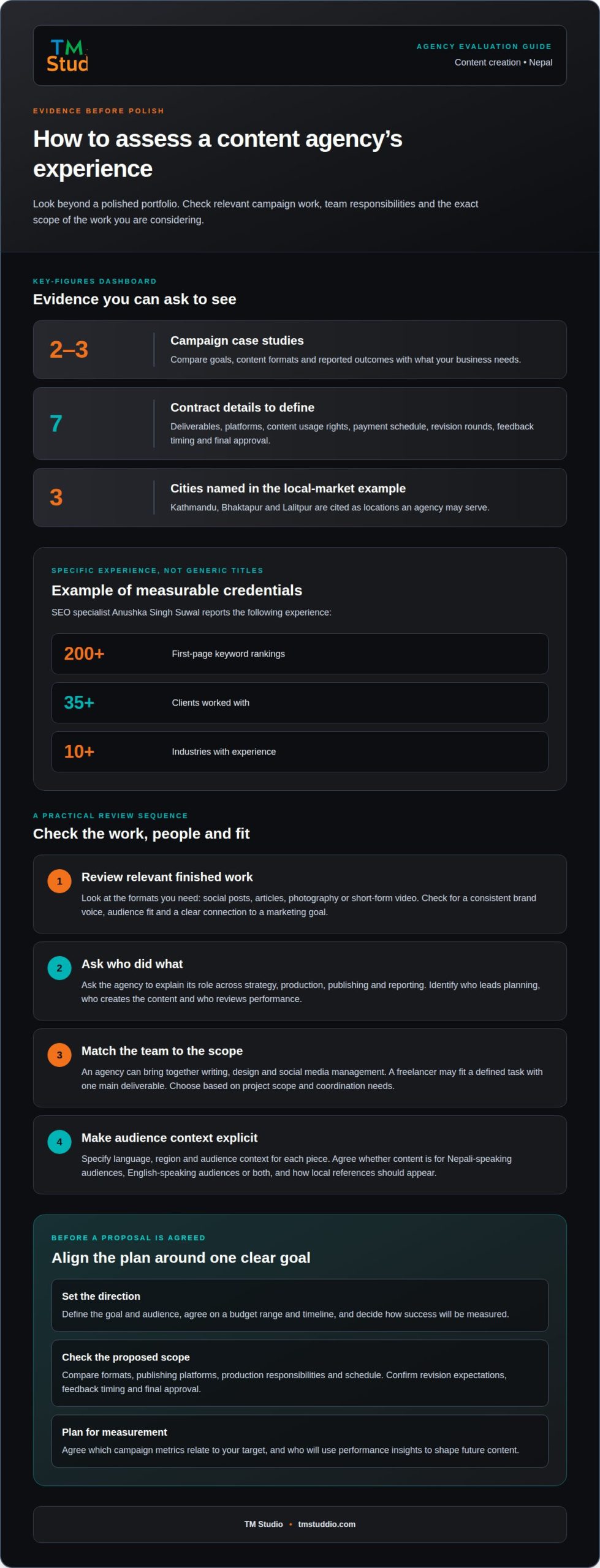
Start with your goal, such as building brand presence or increasing audience engagement. Ask the agency for case studies from two or three campaigns, then compare their goals, content formats and reported outcomes with your needs.
Relevant campaign work matters more than a long client roster. Ask for a reference from a current or recent client and discuss communication, feedback and how the team used insights to adjust its marketing. In the contract, define deliverables, platforms, content usage rights, payment schedule, revision rounds, feedback timing and final approval.
Portfolio and Client Work
Review finished work in the formats you need, such as social posts, articles, photography or short-form video. Look for a consistent brand voice, a clear fit for the intended audience and examples showing how each piece supports a marketing goal.
Ask the agency to explain its role in a campaign, from strategy and production to publishing and reporting. A clear hiring process sets your goal and audience, agrees on a budget range and timeline, and defines how success will be measured. These details help shape a focused proposal.
Agency or Freelancer Comparison
An agency serving Kathmandu, Bhaktapur and Lalitpur can bring together roles such as writing, design and social media management. A freelancer may suit a defined task with one main deliverable. The better fit depends on your project’s scope and coordination needs.
For Nepal’s varied audiences, specify the language, region and audience context for each piece. Agree on whether content should address Nepali-speaking audiences, English-speaking audiences or both, and how local references should appear. Ask for a sample that reflects your intended audience before production begins.
Agency leadership and team
Strong leadership helps set content quality, audience fit and delivery priorities. Look for a lead who can connect your target market with a practical plan and explain each specialist’s role. A strategist might shape topics, while writers and designers turn those insights into social media assets for selected platforms. Clear ownership keeps the work connected to business priorities.
Names and relevant experience make team claims easier to assess. SEO specialist Anushka Singh Suwal reports more than 200 first-page keyword rankings, work with more than 35 clients and experience across more than 10 industries. These figures show why specific experience can be more useful than a generic title. For your project, identify who leads planning, production and performance review, then match each role to the work you need.
Ask how the team handles feedback and changing priorities. A defined contact person can gather input, coordinate revisions and keep decisions moving between specialists. If a campaign shifts from brand awareness to lead generation, for example, the strategist should explain how content themes and platform choices will change. Clarify who approves the final version and how performance insights inform the next plan.
- Leadership: Identify the person accountable for strategy and delivery.
- Specialists: Match writing, design and social media skills to your content formats.
- Coordination: Clarify who gathers feedback and communicates schedule changes.
- Measurement: Ask who reviews results and turns them into future content decisions.
A clear team structure supports consistent creative work and helps align each platform with its audience. Use these role-based checks to see whether the agency’s team can support your goals, not just produce individual posts.
Content marketers develop informative, engaging content to resonate with a target audience and establish a brand as a thought leader. Outreach sends team members to advertising forums and training programs in Thailand, Malaysia, South Korea, and India, supporting continued team development.
Agency options for small businesses
For a small business in Nepal, the top content agency is the one whose campaign experience, audience understanding and scope match your growth target. Compare proposals from two or three agencies, focusing on the work each will deliver rather than a broad ranking. A clear fit can turn digital marketing into a valuable engine for stronger brand presence.
Hiring risks often start with an unclear scope. If deliverables, formats, platforms, production roles or timelines are vague, expectations can diverge once work begins. A proposal should clarify revision rounds, feedback timing and final approval. These details help prevent missed deadlines and show exactly what the agreed work covers.
Small businesses can choose a focused project or a recurring monthly scope, depending on their content needs. A local retailer might prioritize product photography and social posts, while a service business may need informative articles and search-focused content. Define the business goal first, then match the workload to the team and resources available.
- Set a priority: Choose one main target, such as awareness, audience engagement or qualified leads.
- Compare the scope: Check content formats, publishing platforms, production responsibilities and schedule.
- Clarify measurement: Agree which campaign metrics will show progress toward the chosen target.
- Review the proposal: Confirm revision expectations, feedback timing and approval responsibilities.
Use the same goal and deliverable list to compare proposals and spot differences in scope. A lower quote alone does not explain how the work is organized. Ask how the agency plans production, adapts content for each platform and reports performance marketing campaign results. For a small team, a focused scope can support consistent publishing without stretching internal capacity. As insights build, the plan can shift toward formats that engage the intended audience and support sustainable growth.
Monthly content planning and packages
A monthly content plan turns business goals into a repeatable publishing rhythm. It should connect strategies, formats and platforms to a clear purpose, rather than promise a fixed volume without context. A Kathmandu café, for example, could plan seasonal menu graphics, short social posts and search-friendly updates around customer priorities. A practical calendar also assigns production, review and publishing dates.
Review the actual deliverables in each package. The proposal should identify content formats and platforms, who produces each item, and how revisions work. It should also set a realistic schedule for planning, production, feedback and publishing. If advertising is included, separate creative production from the paid promotion budget. Search content and social posts play different roles, so the plan should explain how each supports the business goal.
Content creation pricing depends on the scope and is provided after a quote request. Key factors include content volume, format, production complexity, platforms, research needs, revision scope and whether advertising management is included. A graphic template requires a different workflow from original photography or a detailed article, so compare proposals by scope rather than headline price.
- Deliverables: List each content type, such as graphics, captions, articles or video.
- Platforms: Name the channels and clarify whether content is adapted for each one.
- Workflow: Set planning, review, revision and publishing stages in the calendar.
- Measurement: Select indicators that connect each format to its intended outcome.
Keep the first plan focused on the audience and business target. A local retailer might prioritize product graphics and useful search content, then adjust later strategies using engagement and traffic insights. Avoid paying for formats that lack a defined role. Plan professional content creation around your monthly priorities and publishing workflow.
TM Studio: Content Creation
TM Studio helps businesses turn content goals into professional material tailored to their audiences. Its content creation supports consistent publishing, while photography and videography provide original visual assets for campaigns. Search Engine Optimization can also align online content with topics potential customers are searching for.
Turn to TM Studio when planning feels fragmented, production demands stretch your team, or your visuals need a more cohesive direction. Share your business priorities, intended audience, preferred platforms and required content formats. That context helps shape work around your publishing goals and connects creative choices to a clear business purpose.
Ready to discuss content for your business? Contact TM Studio to start the conversation.
Build Your Next Content Move
Start by choosing the business priority that deserves attention first. A content creation agency in Nepal can help turn that priority into a focused direction for your brand, shaped around your audience and publishing needs. Identify the message you want customers to remember, then choose formats that can communicate it clearly across your channels.
TM Studio brings together content creation with Search Engine Optimization, Photography and Videography. This combination can connect useful information with original visuals and search-focused content, keeping your priorities at the center of planning. Choose a starting point that fits your business now, then build on it as your needs evolve.
Contact TM Studio to discuss your content and take a clear next step toward stronger, more consistent publishing.
Frequently Asked Questions
Which services will a content marketing agency offer?
A content marketing agency can plan and create material that helps a business inform and engage its audience. Services may include content creation, social media marketing, Search Engine Optimization, photography, videography and advertising campaigns. TM Studio provides these services to businesses seeking coordinated digital content. A product launch, for example, could combine product photography, social posts and search-focused content around one message.
Core Pillars: What Does a Digital Agency Do in Nepal?
A digital agency in Nepal can help businesses strengthen online visibility through content, social media, search and paid campaigns. These activities serve different purposes: Search Engine Optimization supports organic discovery, social media marketing builds audience engagement, and advertising promotes targeted campaigns. Photography and videography provide visual assets for digital channels. The right mix depends on the business goal and intended audience.
What content creation services do agencies in Nepal offer?
Content creation services can include blog posts, social media posts, video scripts and website copy. Agencies may also produce photography and videography for product promotions, brand storytelling or campaign assets. TM Studio creates content for digital channels and social networks, tailoring messaging to the intended audience. A business launching a service, for instance, could pair an explanatory blog post with social content.
How can I choose a content creation agency in Nepal?
Choose a content creation agency in Nepal by matching its capabilities to a real business need. A retailer in Kathmandu, Bhaktapur or Lalitpur might need product visuals and social content, while a professional service may prioritize informative articles. Check that the agency understands your audience, can produce the formats you need and explains how its work supports your business objective.
Which are the top content creation agencies in Nepal?
This article focuses on TM Studio rather than presenting a ranked list. Compare proposals based on relevant campaign experience, audience understanding and scope, then choose the fit that best matches your goals.